 REINFORM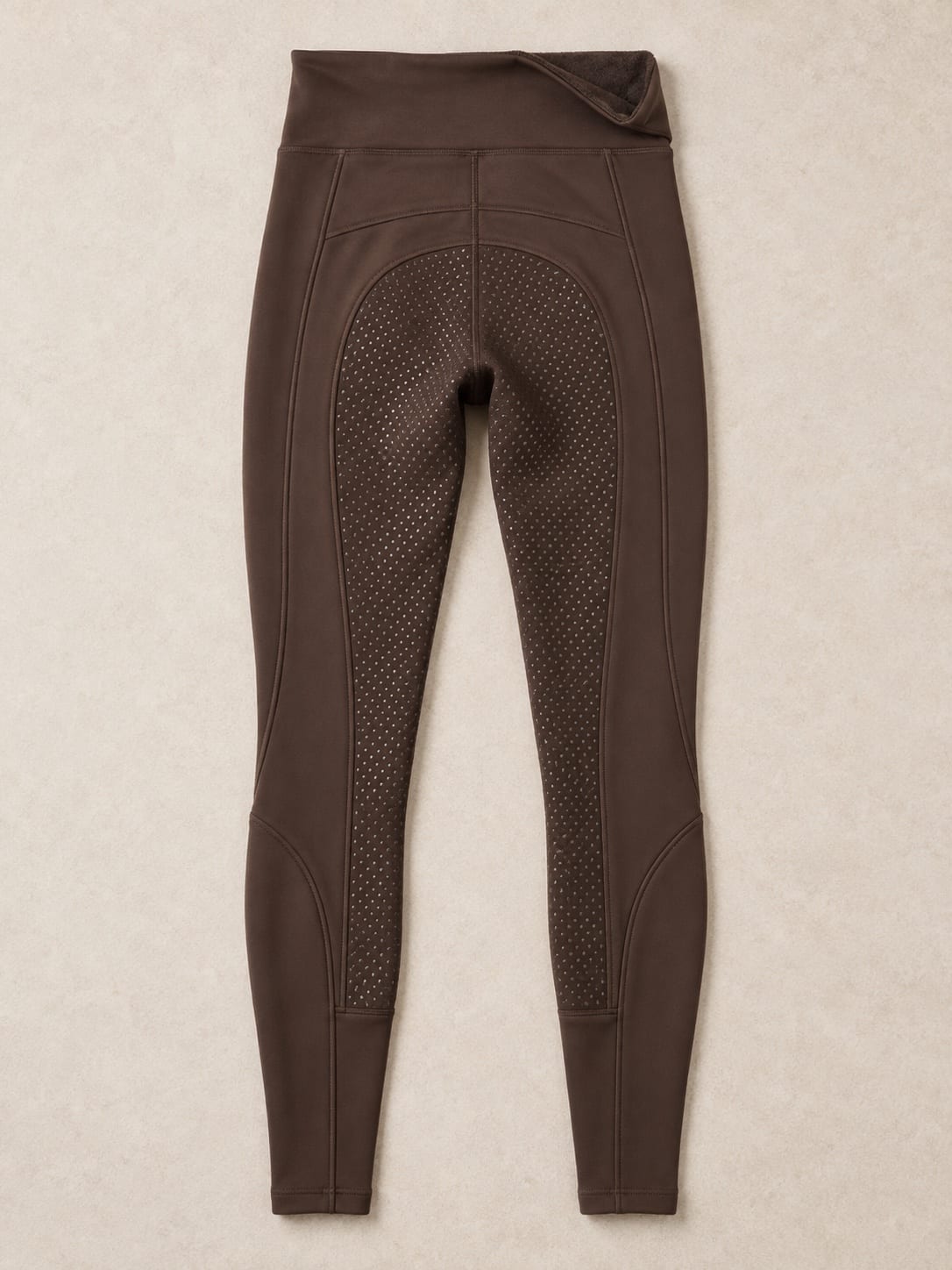
Warmth Without Saddle Bulk
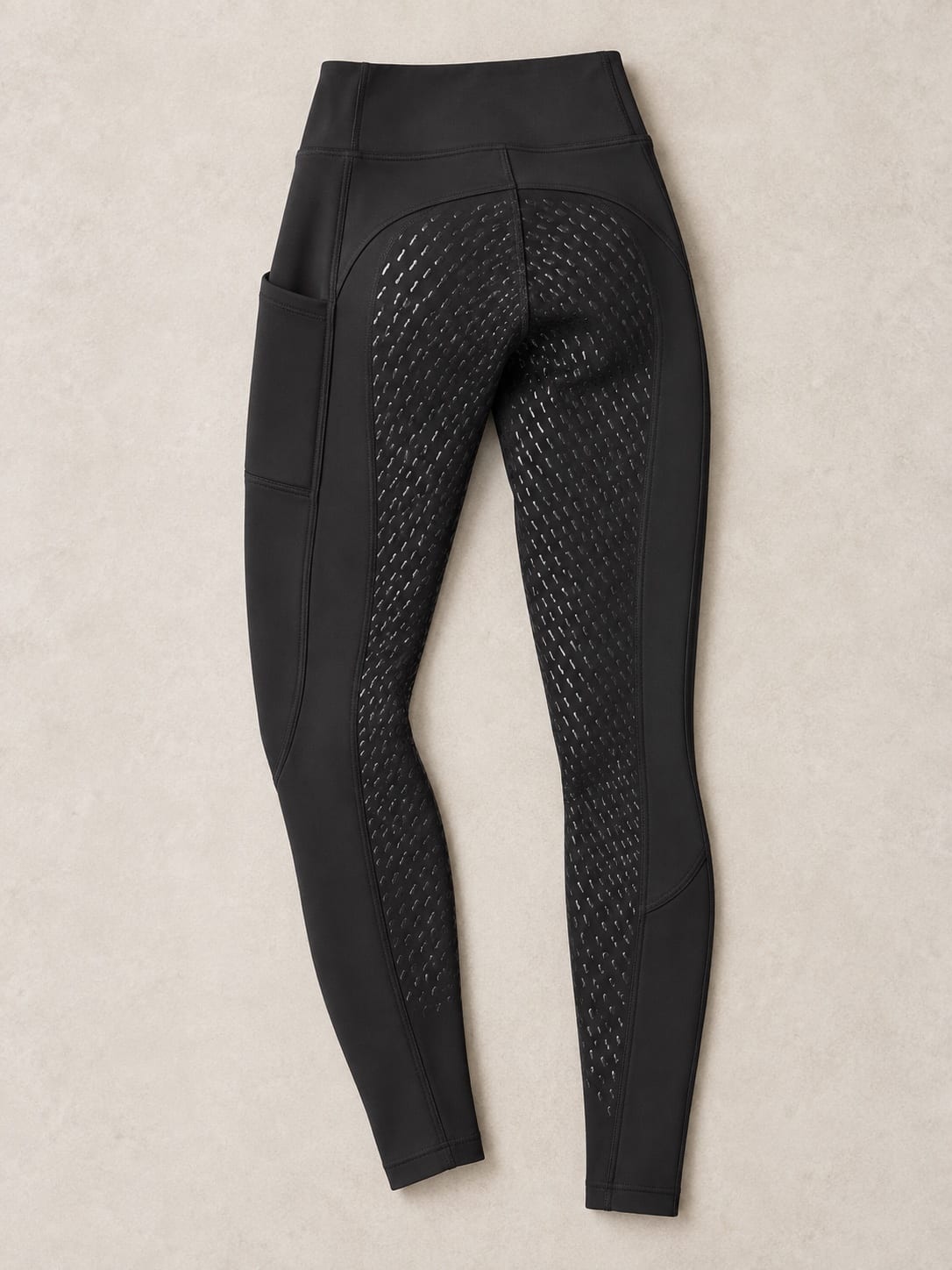
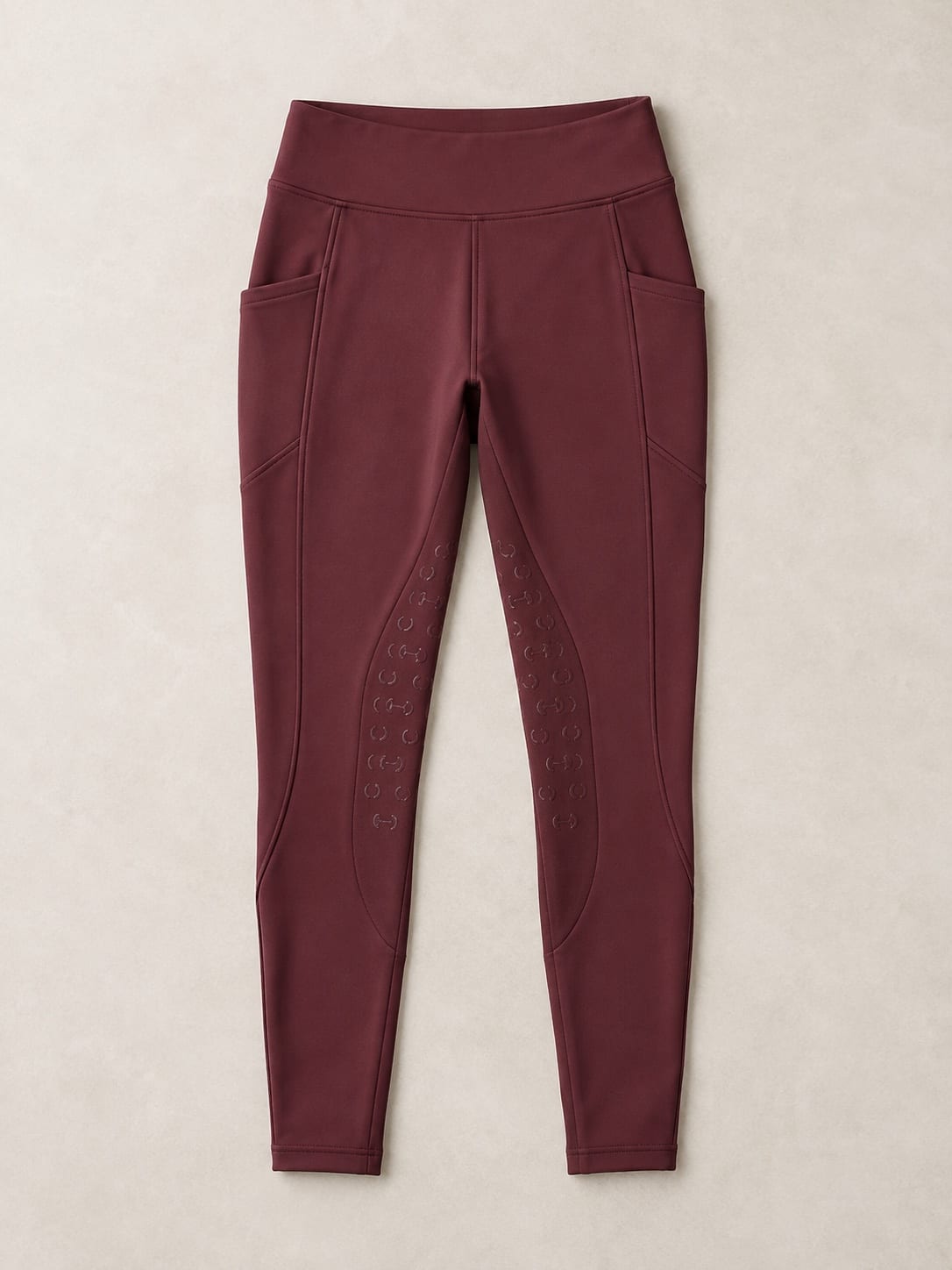
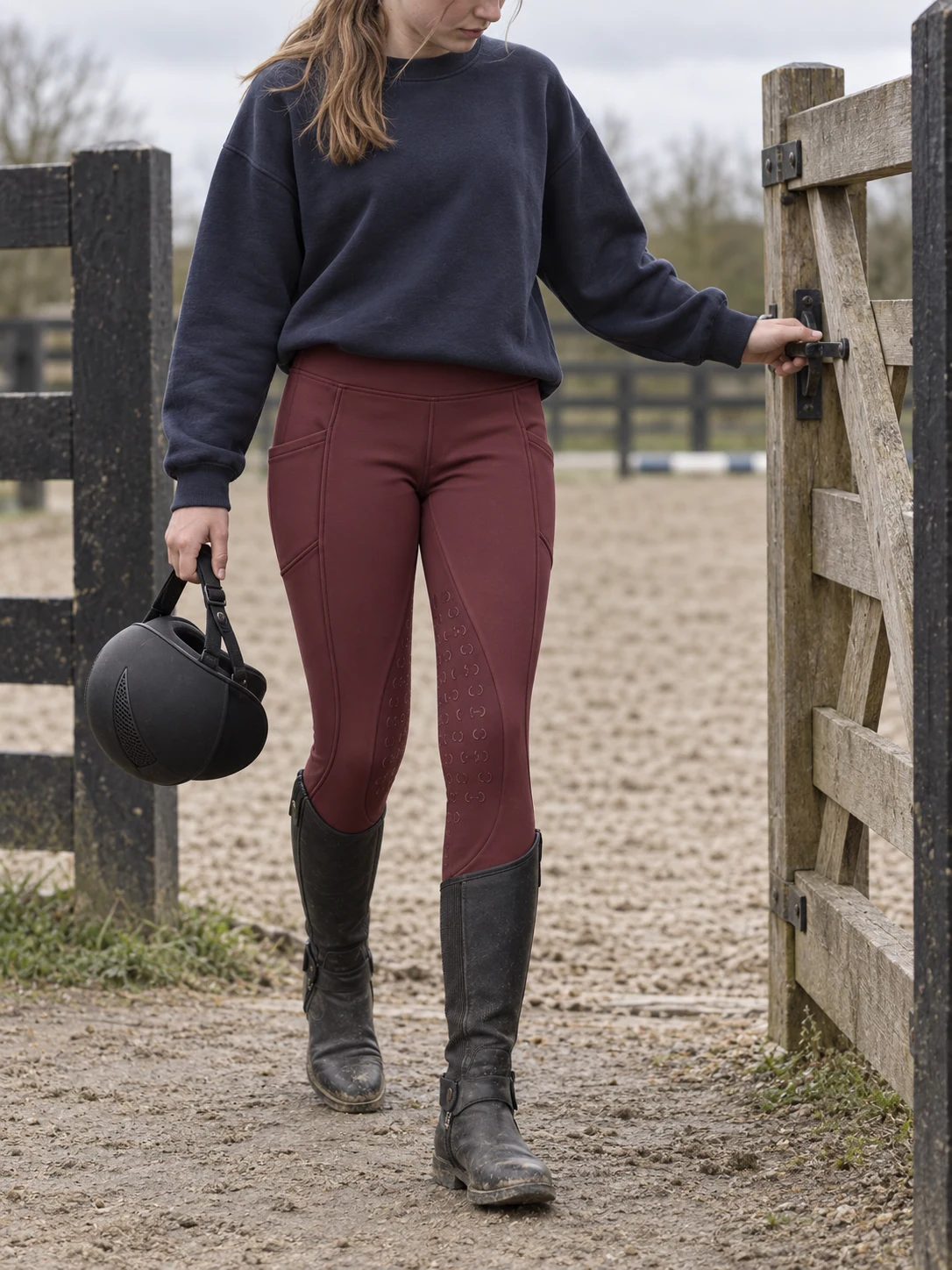
Winter brushed riding tights:
the private label buying guide.
Private label winter brushed riding tights for equestrian brands: brushed fabric, stretch recovery, grip and wash checks for bulk production. Request an OEM quote.
A development direction for your brand. Final material, construction and performance by specification and sample approval.START WITH
THE RIDER.
For cold-climate brands, autumn and winter capsules, outdoor riding schools and retailers seeking a pull-on layer that remains equestrian in grip, pocket and boot details.
Product development context
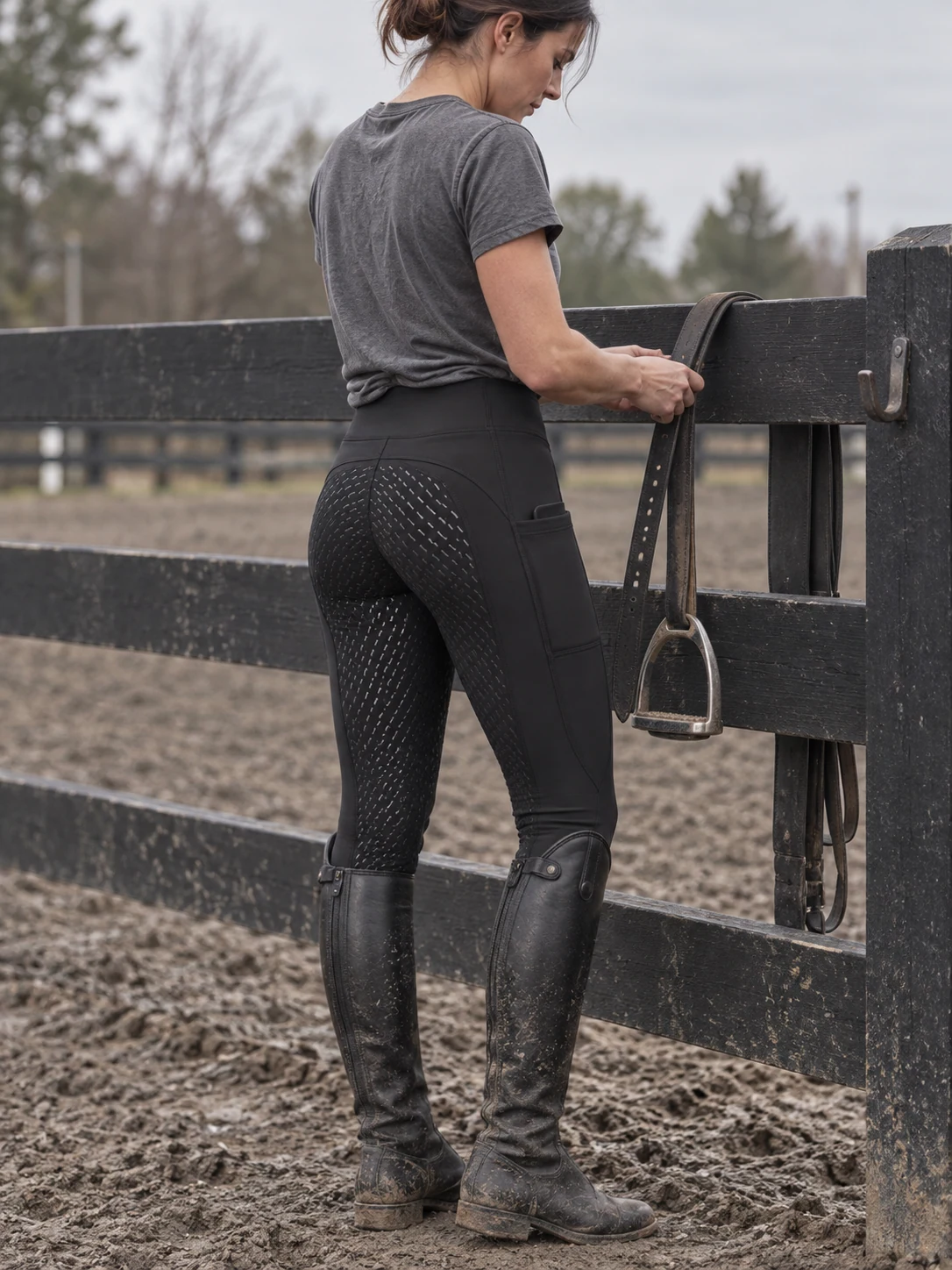
Winter riding tights need to retain mobility and a clean boot fit while adding insulation. A brushed inner face can trap warmth and feel soft, but excessive loft creates bunching, slow drying or pressure under tall boots. Wind exposure, temperature range and lesson duration should be specified as use conditions, not converted into a guaranteed warmth claim without evidence. Buyers should assess the relationship between knit weight, brushed depth, outside surface, waistband recovery, seam bulk, grip adhesion and care. Transitional and deep-winter products may require different briefs rather than one vague thermal style.
Defined use climate
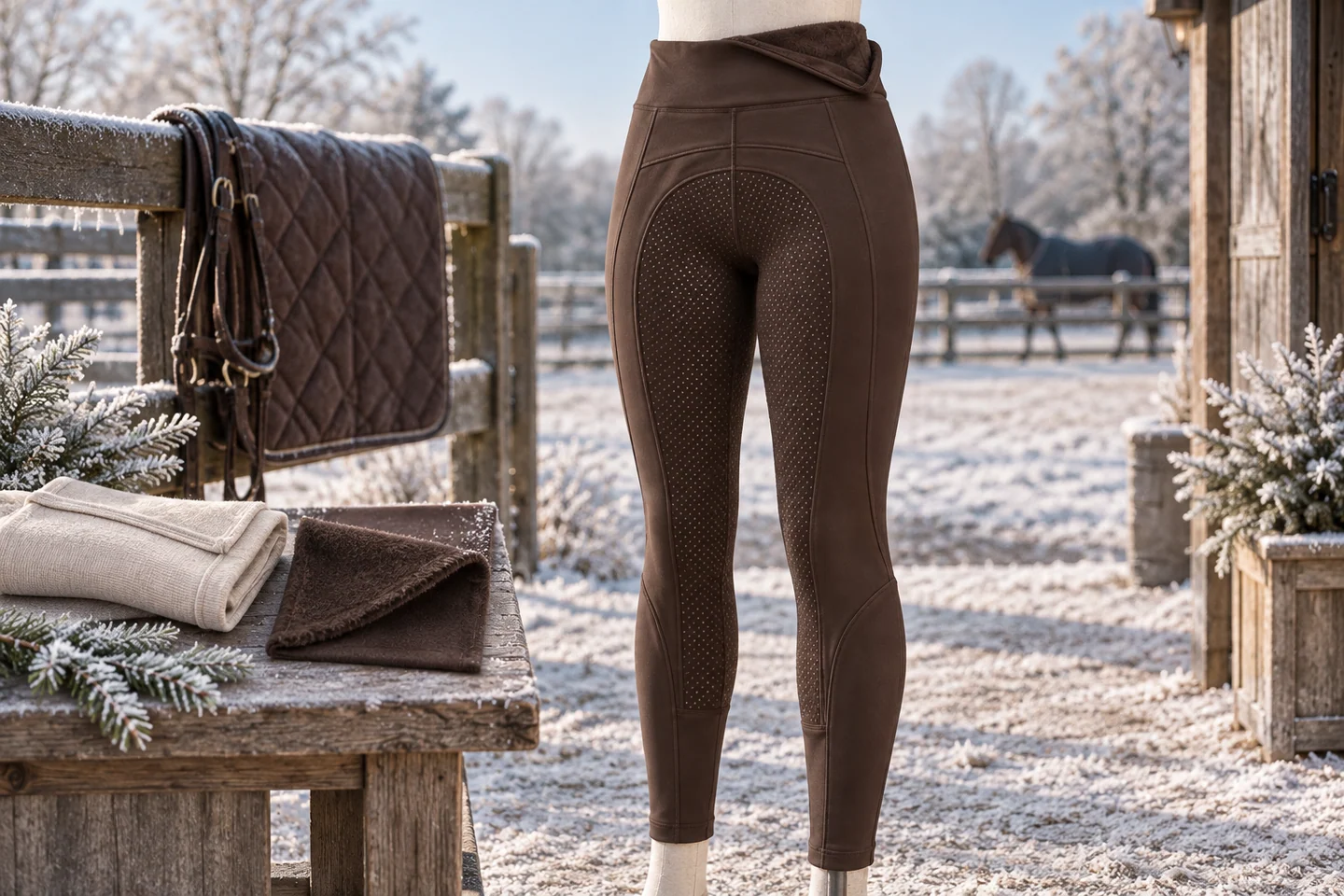
State temperature, wind, activity and layering assumptions used for development. Perceived warmth varies by rider and conditions, so merchandising should describe construction and intended season while any numeric thermal claim waits for an agreed test and evidence.
Bulk management
Inspect brushed thickness at inner-knee, ankle, gusset and seam intersections. The warmest hand sample may become uncomfortable under a fitted boot or saddle pressure. Pattern ease and seam choice need to reflect finished fabric thickness.
Recovery after wear
Brushing and heavier constructions can change stretch return. Measure knee, seat and waistband before and after a long wear session and laundering so warmth does not come with permanent bagging or a descending waistband.
THE FABRIC
SETS THE FEEL.
Compare material directions against your rider, climate and care expectations. Request the actual fabric specification and evidence for any performance claim.
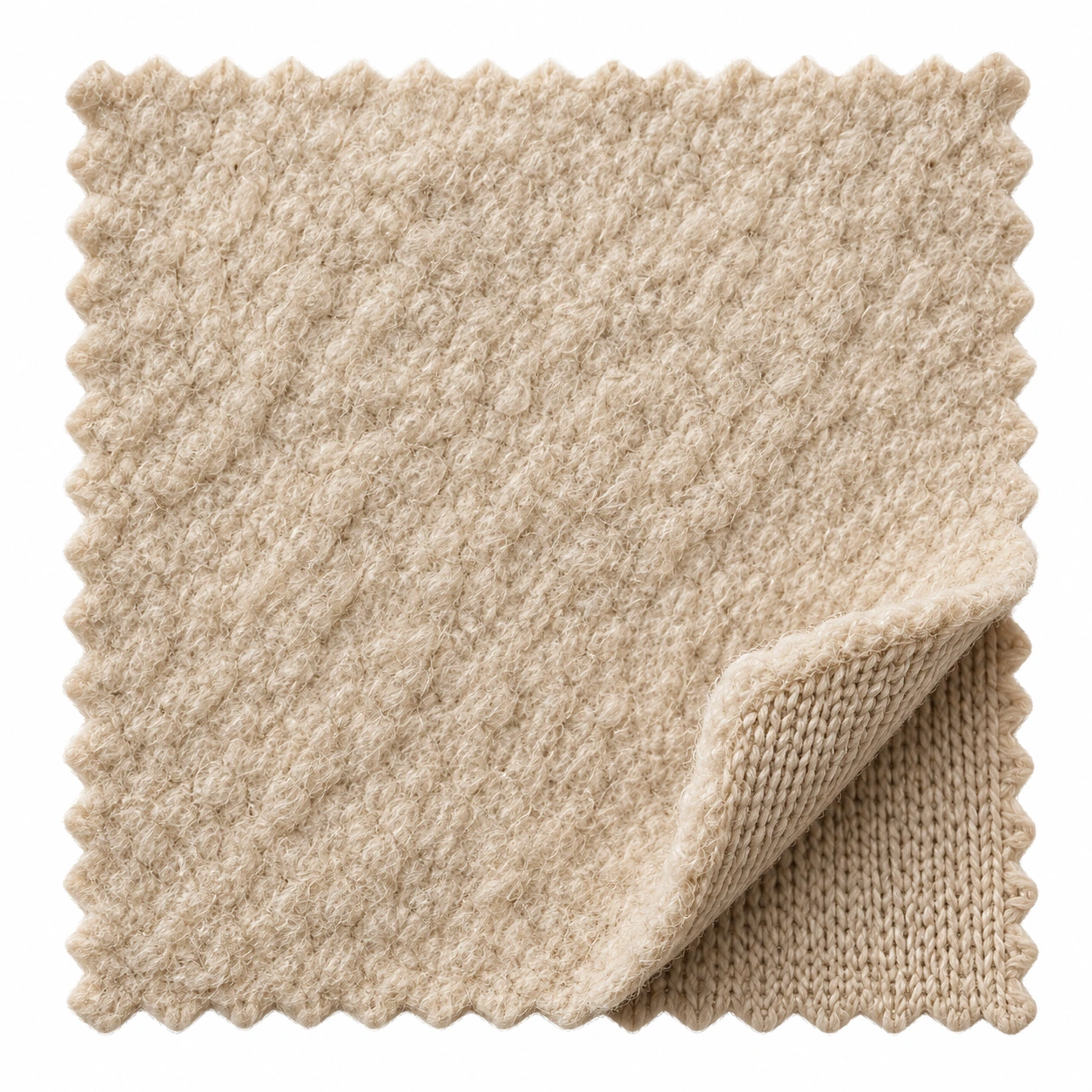
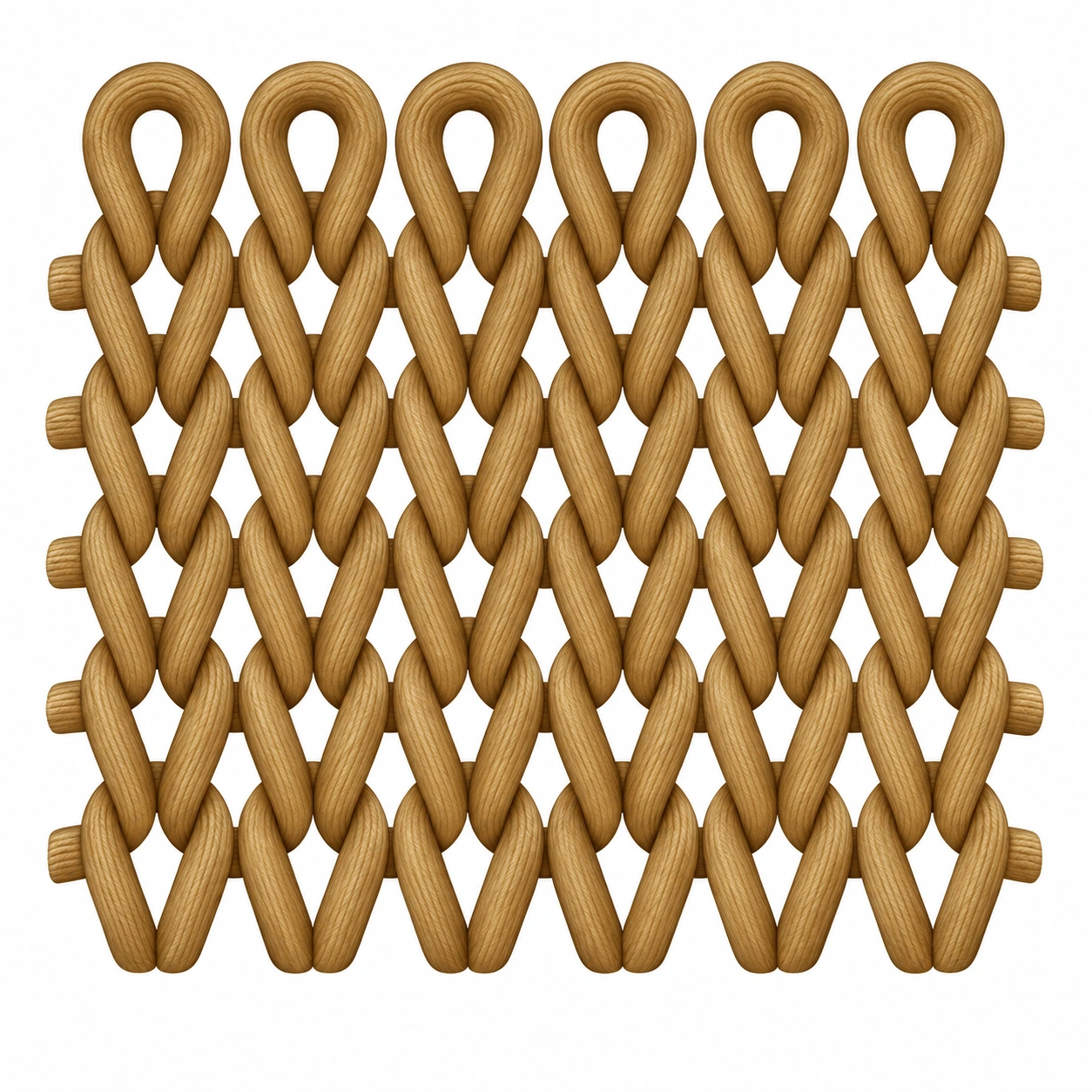
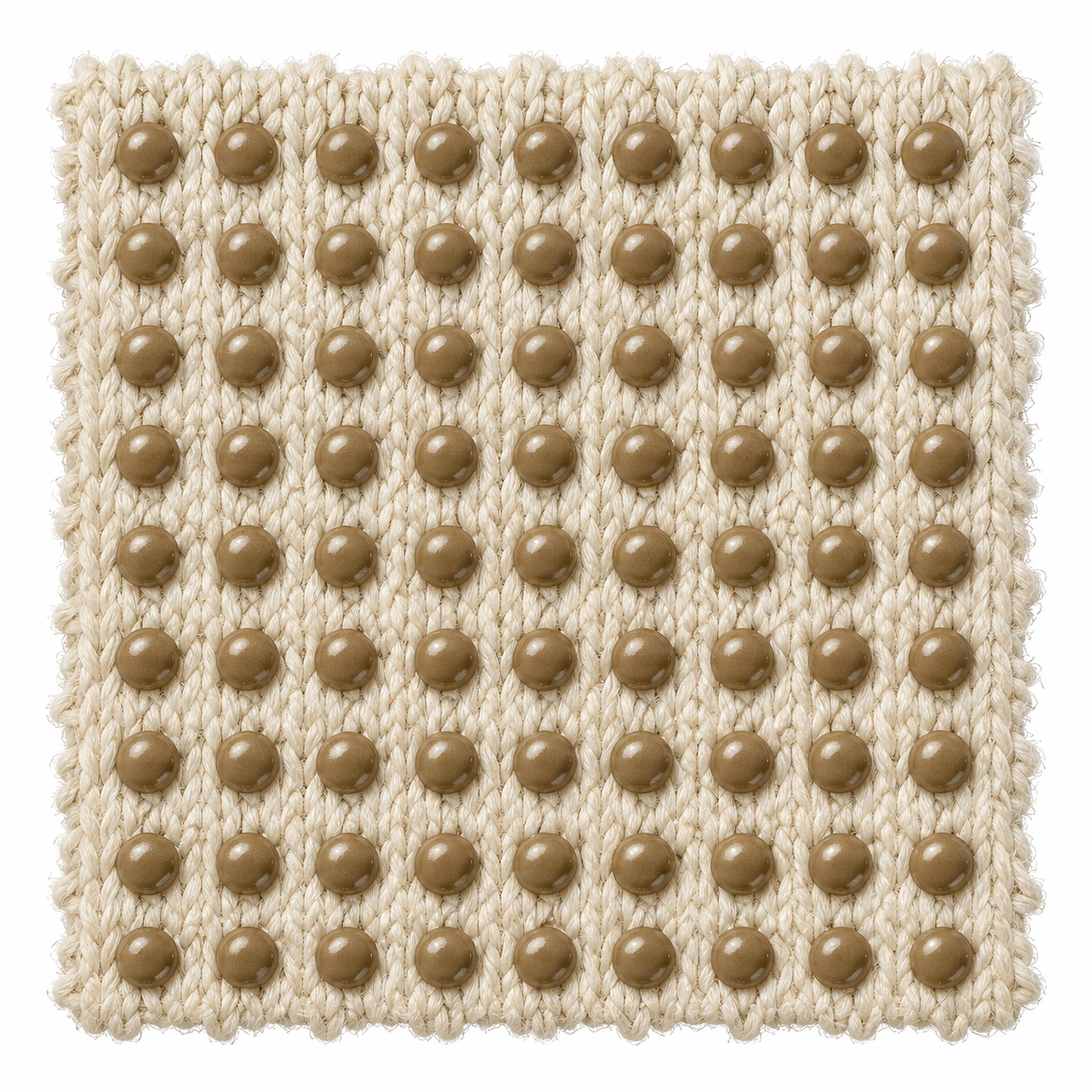
| Material direction | Why consider it | What to verify |
|---|---|---|
| Brushed-back stretch knit | A knit with an insulating inner face and smoother exterior can support cold-weather comfort while reducing hay and hair pickup. Weight and loft should match transitional or winter positioning. | Test actual colours for stretch, recovery, pilling, abrasion, dimensional change, colourfastness, drying and any agreed thermal or wind-resistance claim. |
| Smooth-face technical knit | A less fuzzy exterior helps a winter tight retain a clean appearance around the barn and gives a stable base for grip and logos. | Compare surface pilling, snagging, debris pickup, print adhesion and colour change after wear and repeated proposed care cycles. |
| Cold-compatible grip print | Grip chemistry and fabric surface must work together across cool use and laundering. A brushed backing can affect cure and hand even when the print is external. | Approve strike-offs on production fabric, condition samples in representative temperatures, then inspect tack, flexibility, adhesion, cracking and blocking. |
These are sourcing comparisons, not a list of stocked or certified fabrics. Confirm composition, weight, finish, availability and testing with the material selected for your project.
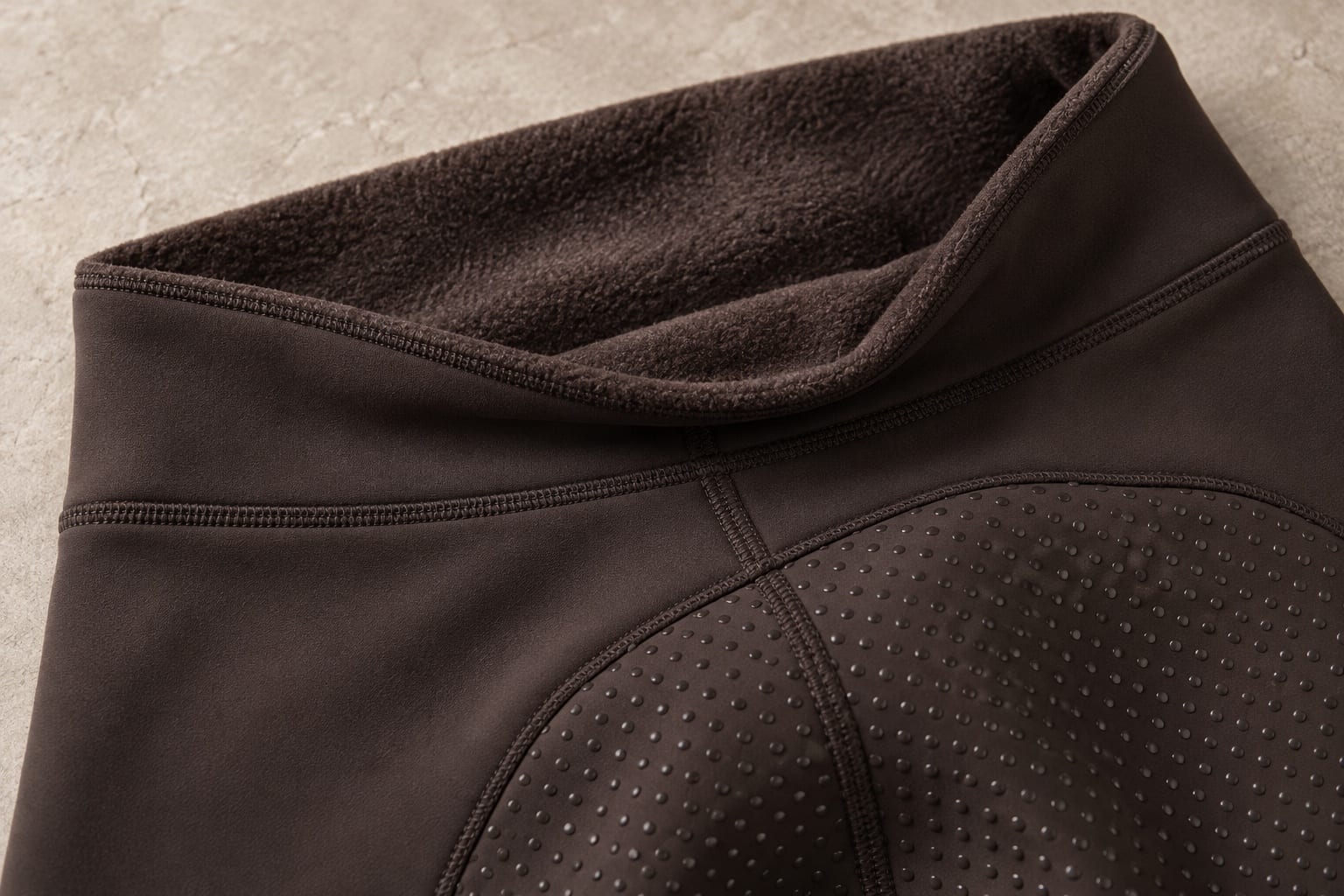 A CLOSER LOOK / DEVELOPMENT CONCEPT
IT’S IN
THE DETAILS.
Reduced ankle bulk
Taper the lower leg and manage seam allowances so the brushed fabric lies smoothly inside the intended tall boot.
Warm but stable waist
Use waistband layers that retain recovery without becoming a thick roll beneath jackets or creating heat and pressure.
Protected pocket opening
Place and finish phone storage so gloves can access it, while the loaded pocket remains clear of saddle and outerwear hems.
Low-profile inner seams
Choose seam routes and finishes that avoid concentrated ridges once thicker fabric is folded and compressed in riding positions.
FROM THE BRIEF.
INTO THE WORKROOM.
Fit and stretch have to work together. Use the chosen knit to resolve the waistband, seam route and contact areas.
Explore our factory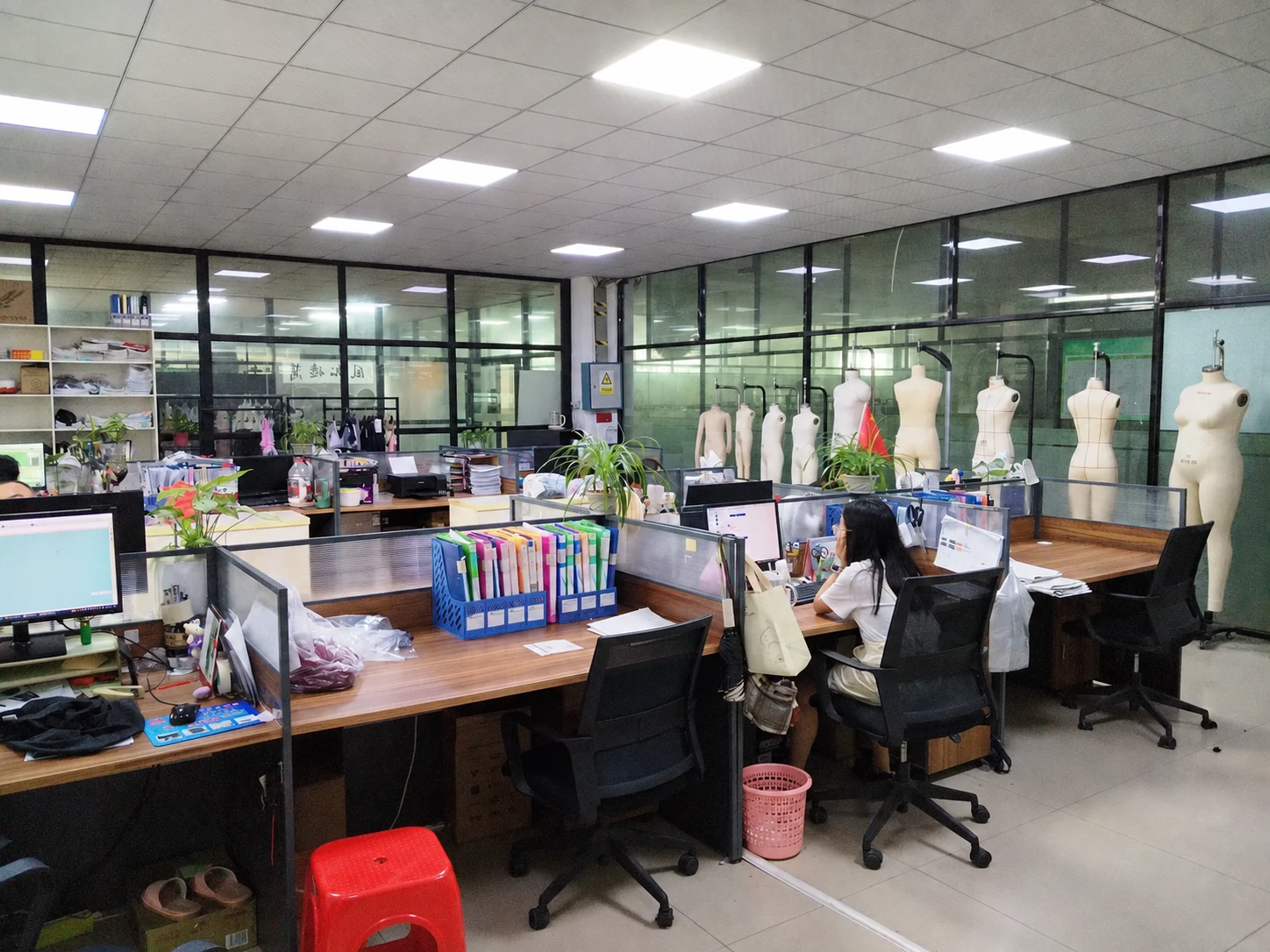
Reduced ankle bulk
Taper the lower leg and manage seam allowances so the brushed fabric lies smoothly inside the intended tall boot.
Carry this into approval Factory views show our working environment. Your garment follows its agreed specification and sample.GET THE
RIGHT FIT.

- AWaist
- BHip
- CRise
- DInseam
A size label is only the beginning. Agree the measurement method, review the garment in use and keep the approved fit record with your specification.
Your fit-session checklist
Record the size worn, body measurements, intended underlayers and every proposed correction with the dated sample.
Note the size worn, body measurements, intended underlayers and each proposed correction. Recheck the affected measurement after a revision; confirm the size breakdown for each style and colour before bulk.
MAKE IT
RECOGNISABLY YOURS.
Use the product’s construction to guide decoration and finishing. Ask for placement, colour and material approval on the relevant sample.
Small details.
One identity.
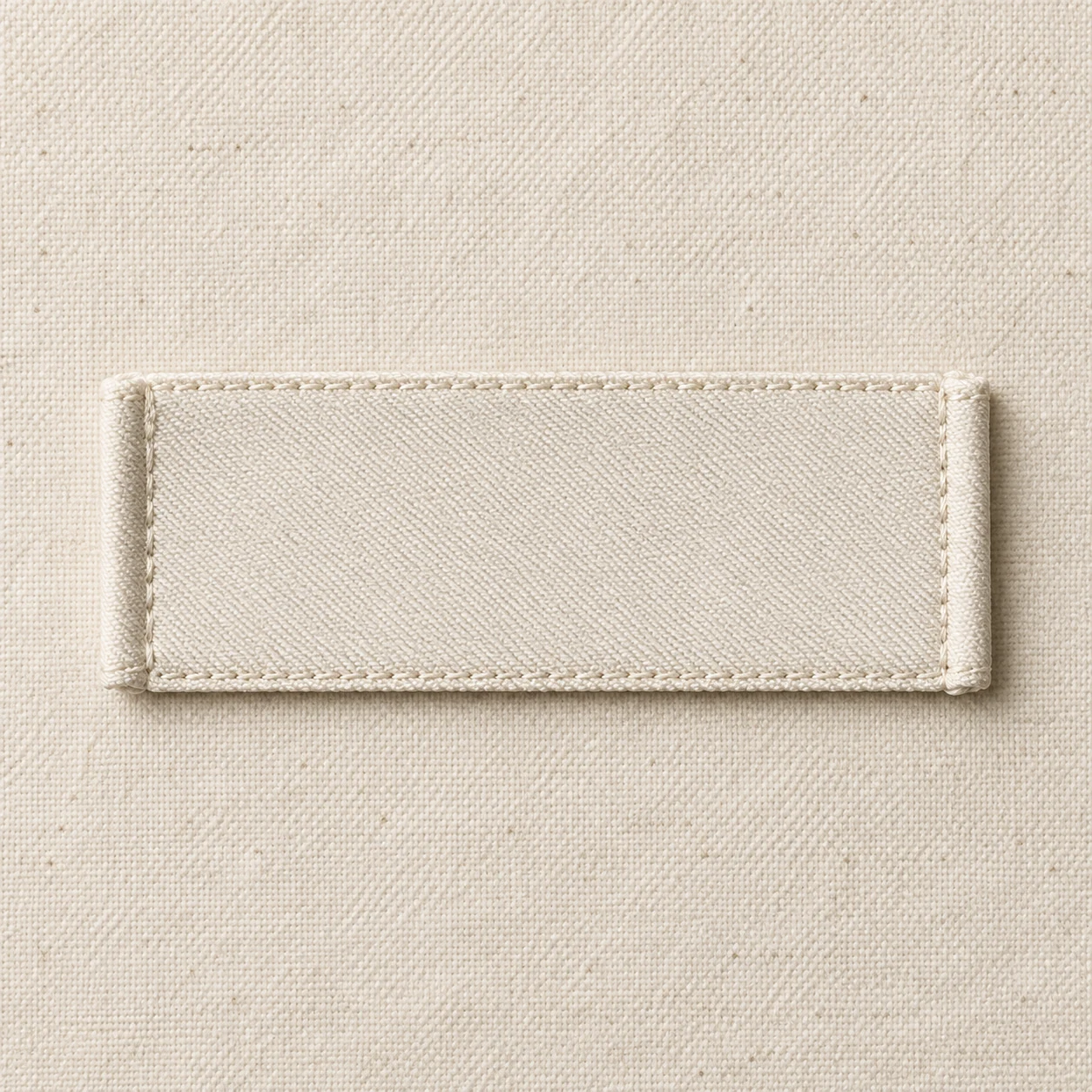
Folded edges · fine weave

Textured stock · cord attachment
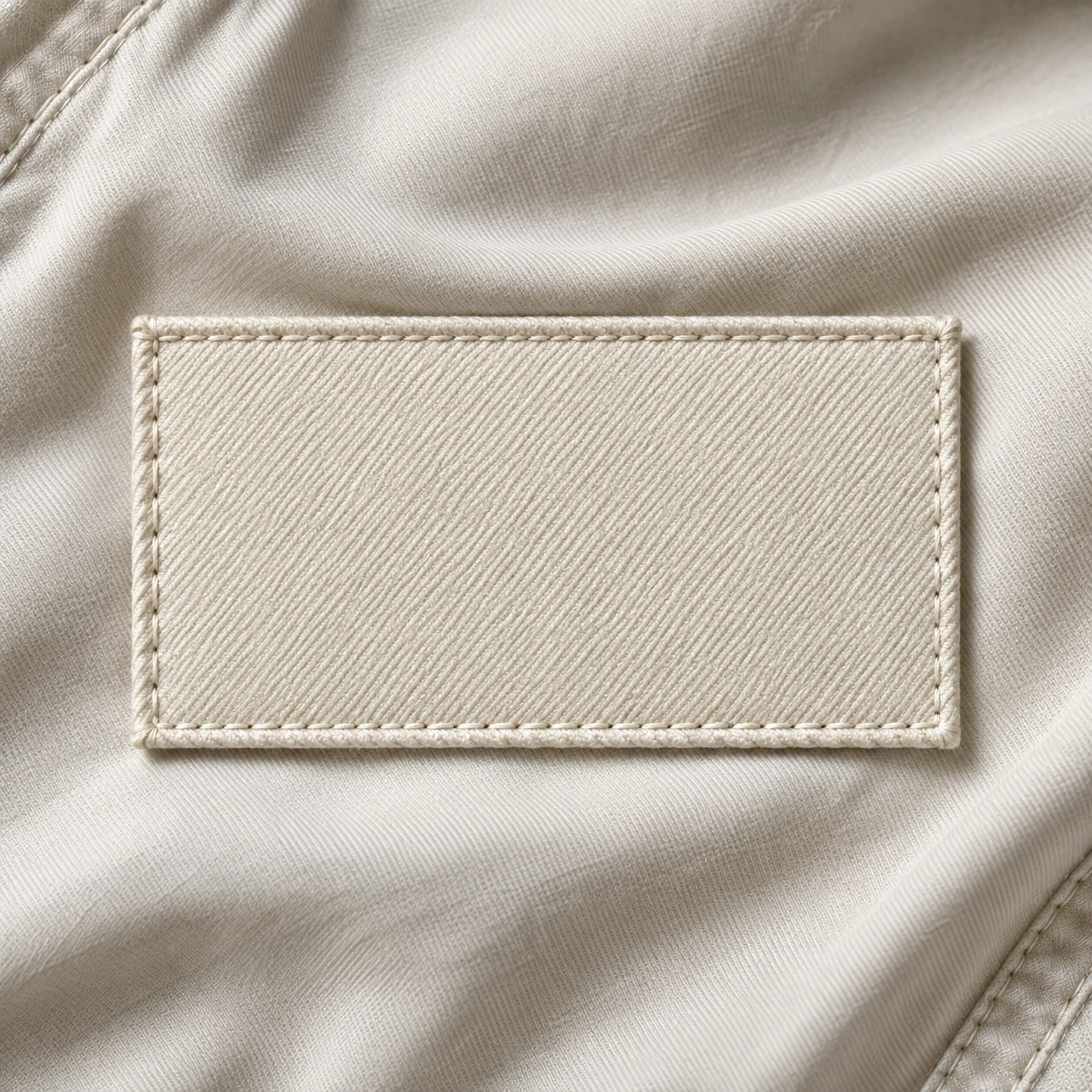
Raised edge · stitched placement
Material mockups with a live wordmark study. Print, weave, colour matching and placement are confirmed on your physical sample.
Warmth tier
Brief separate transitional and colder-season fabric directions with target weight, loft and layering assumptions; approve naming only after material evidence is reviewed.
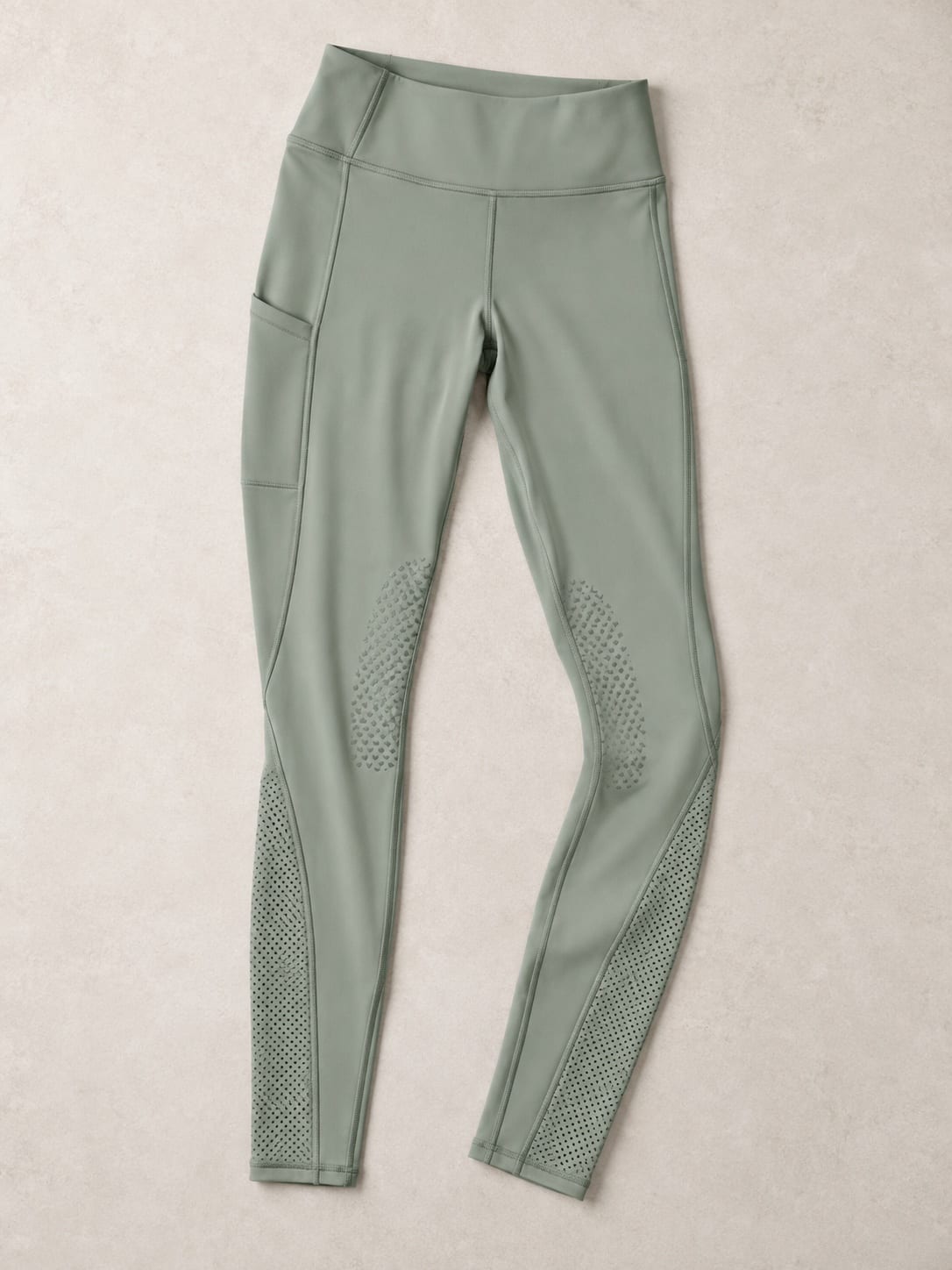
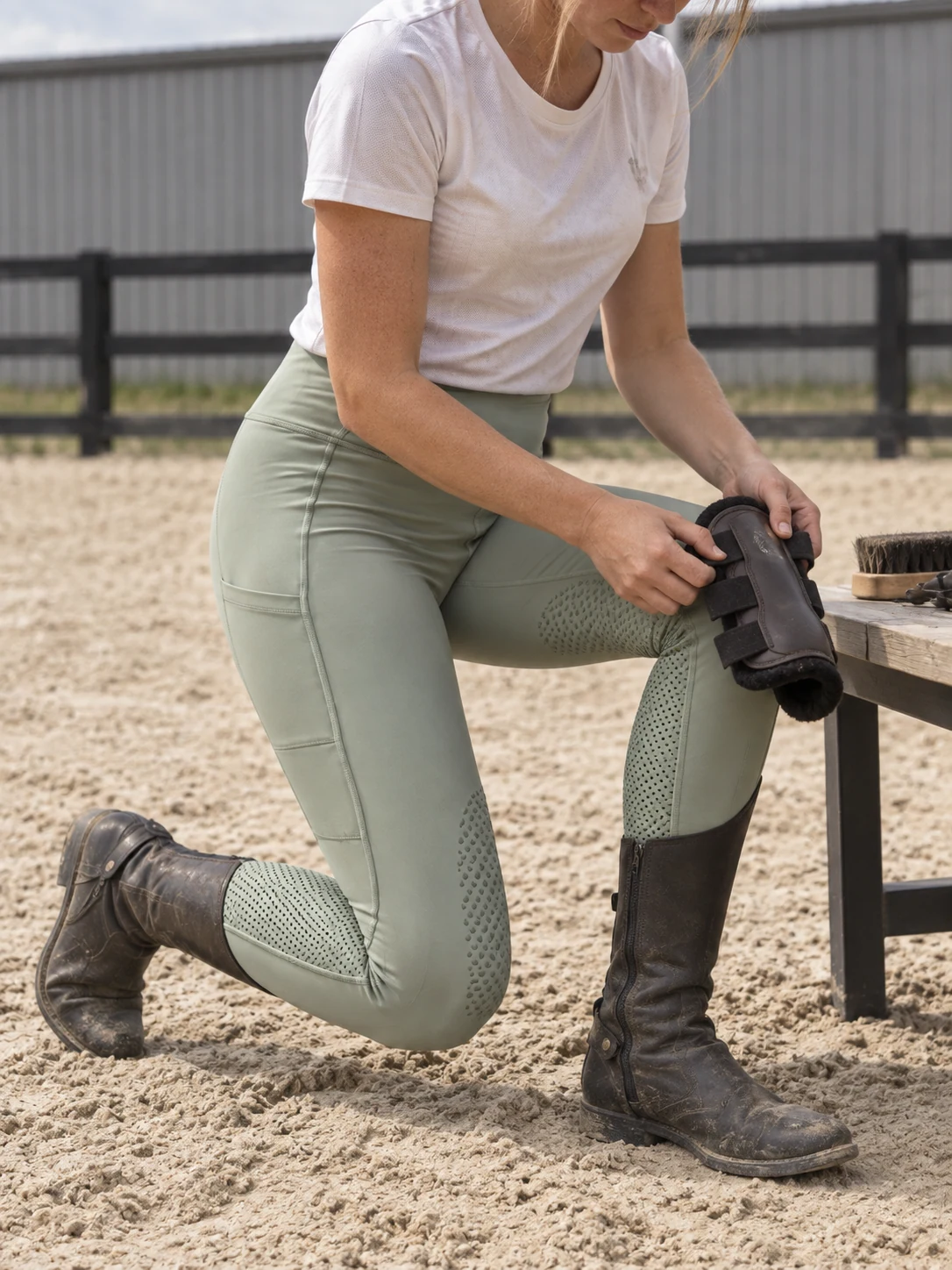
Full or knee grip
Select coverage by discipline and mobility preference. Test denser print on thick fabric because it may change seat flexibility more than on summer knits.
Winter pocket
Size openings for gloved access, decide secure closure needs and check pocket position against longer jacket hems and the saddle flap.
Reflective detailing
Place decorative low-light accents outside stretch-critical and contact zones; make visibility claims only when the chosen material and configuration have appropriate support.
APPROVE THE DETAIL.
THEN THE ORDER.
The first sample helps you make decisions. Define review conditions and acceptance criteria before you compare the result.
Review the winter brushed riding tights sample
Sampling takes 7–10 working days from the agreed start. Record each decision against the dated sample before bulk approval.
Rider, material direction, measurements and artwork.
DEFINE THE STARTTurn the agreed direction into a garment to review.
7–10 WORKING DAYSReview fit, finish and changes. Confirm the final specification.
REVISE IF NEEDEDProceed with agreed quantities, colours, labels and packing.
30–45 WORKING DAYSA shared development direction
Bring reference garments, your rider profile, target colours and any artwork. We turn these into the measurements, materials and construction questions that the sample needs to resolve.
Sample feedback can return to development. Revisions and transit are planned separately; timing begins from the agreed specification and start date.

KEEP THE APPROVAL.
WITH THE ORDER.
One agreed reference for the workroom: the dated sample, its specification and your confirmed order breakdown.
Sample decisions
- Layered fit
Wear with the intended base garments, socks, boots and jacket, checking waist overlap, ankle bulk, knee flexion and dressing ease.
- Extended cold ride
Use the sample for the planned session in representative weather, recording comfort, sweat accumulation, mobility and post-ride drying without promising universal warmth.
- Knee and seat recovery
Measure before wear, immediately after riding and after rest, comparing bagging against the approved reference and tolerances.
Style, colour & size allocation
Confirm each style and colour separately, with the size allocation attached. The minimum is 100 pieces per style, per colour.
Labels, packing & timing
Agree label artwork, packing instructions and the production start. Bulk production takes 30–45 working days from the confirmed start; revisions and transit are planned separately.
A CLEARER BRIEF.
A MORE USEFUL QUOTE.
Price follows an agreed product, quantity and delivery scope. Use these inputs to compare proposals on the same basis.
Fabric weight and brushing
Heavier knit, deeper brushing, custom colour and verified targets can raise material and process cost.
Winter-specific testing
Thermal, wind, drying or durability claims require defined methods, samples and documentation.
Grip coverage
Full-seat area and denser deposits increase print material and may require extra process tuning.
Complex pocket closure
Glove-friendly zips, garages and reinforcement add trims, operations and bulk-control work.
Bring these six things
Planning baseline: 100 pieces minimum per style, per colour. Sampling takes 7–10 working days; bulk production takes 30–45 working days from the agreed start.
100 pieces minimum per style, per colour. State each colour quantity separately; confirm your proposed size allocation.
GOOD QUESTIONS.
BETTER DECISIONS.
Product-specific sourcing questions to resolve before sampling.
Buyers usually combine a heavier or brushed stretch knit with equestrian grip, stable waistband, low-bulk seams and a boot-compatible ankle. The intended temperature and layering system should be explicit; warmth language needs evidence for the exact construction.
It should be revalidated. Thickness, stretch, recovery and friction can change garment dimensions, ease, seam bulk and grip behaviour. Begin from the approved silhouette, then adjust the pattern and fit the actual winter material before bulk approval.
Use reliable evidence for the complete garment, including brushed knit, grip, thread, elastic, zips, labels and logos. Confirm washing, drying, ironing and relevant warnings for the destination market; do not copy instructions from a fabric card alone.