 REINFORM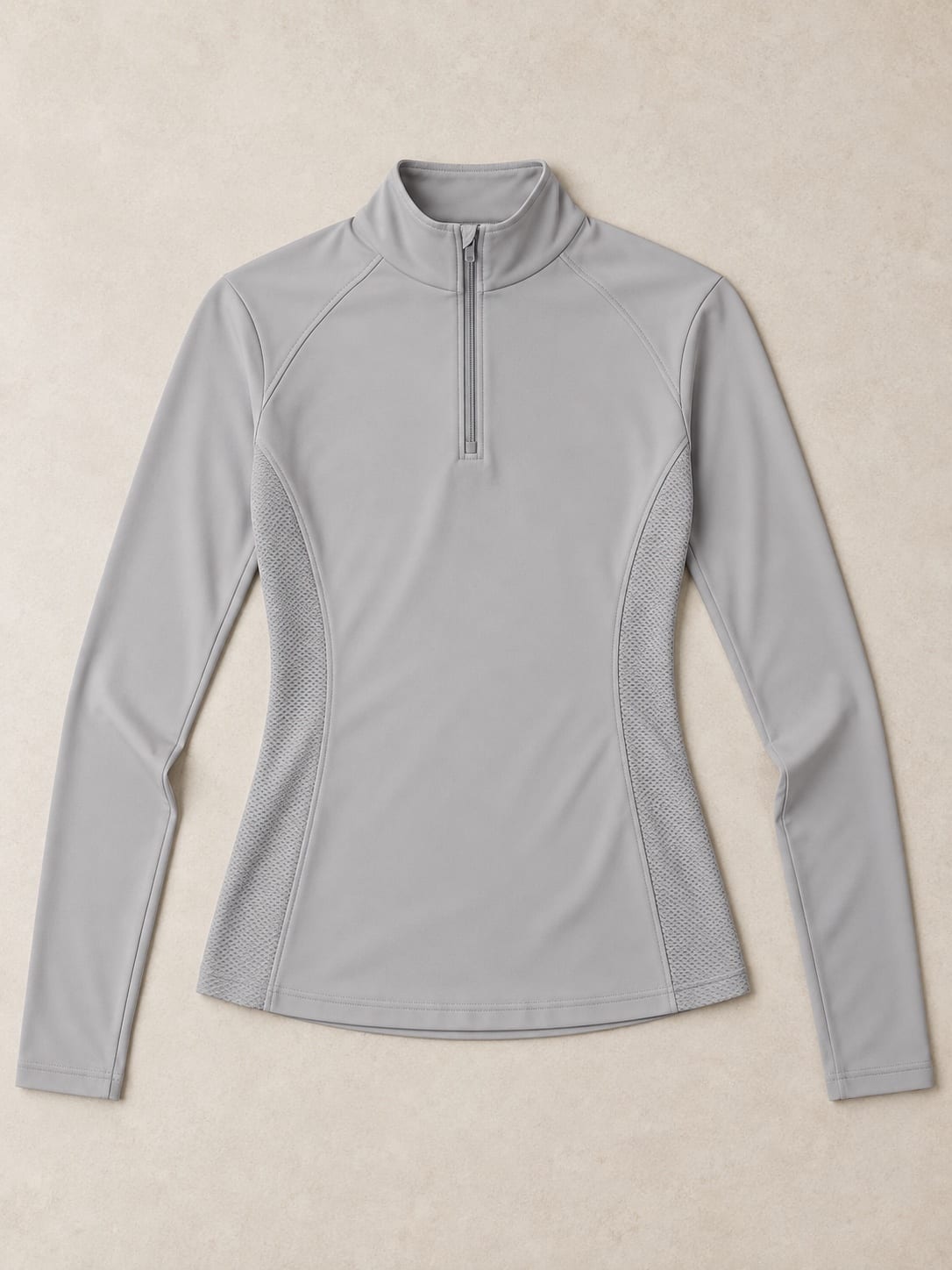
Map Airflow Around the Rider
Mesh-panel summer base layer:
the private label buying guide.
Private label mesh-panel riding base layers for equestrian brands: ventilation, coverage, seam comfort and fabric approval for your range. Request an OEM quote.
A development direction for your brand. Final material, construction and performance by specification and sample approval.START WITH
THE RIDER.
For hot-weather equestrian labels, resort-market retailers, summer team kits and training ranges seeking a visibly technical top that still looks polished around the yard.
Product development context
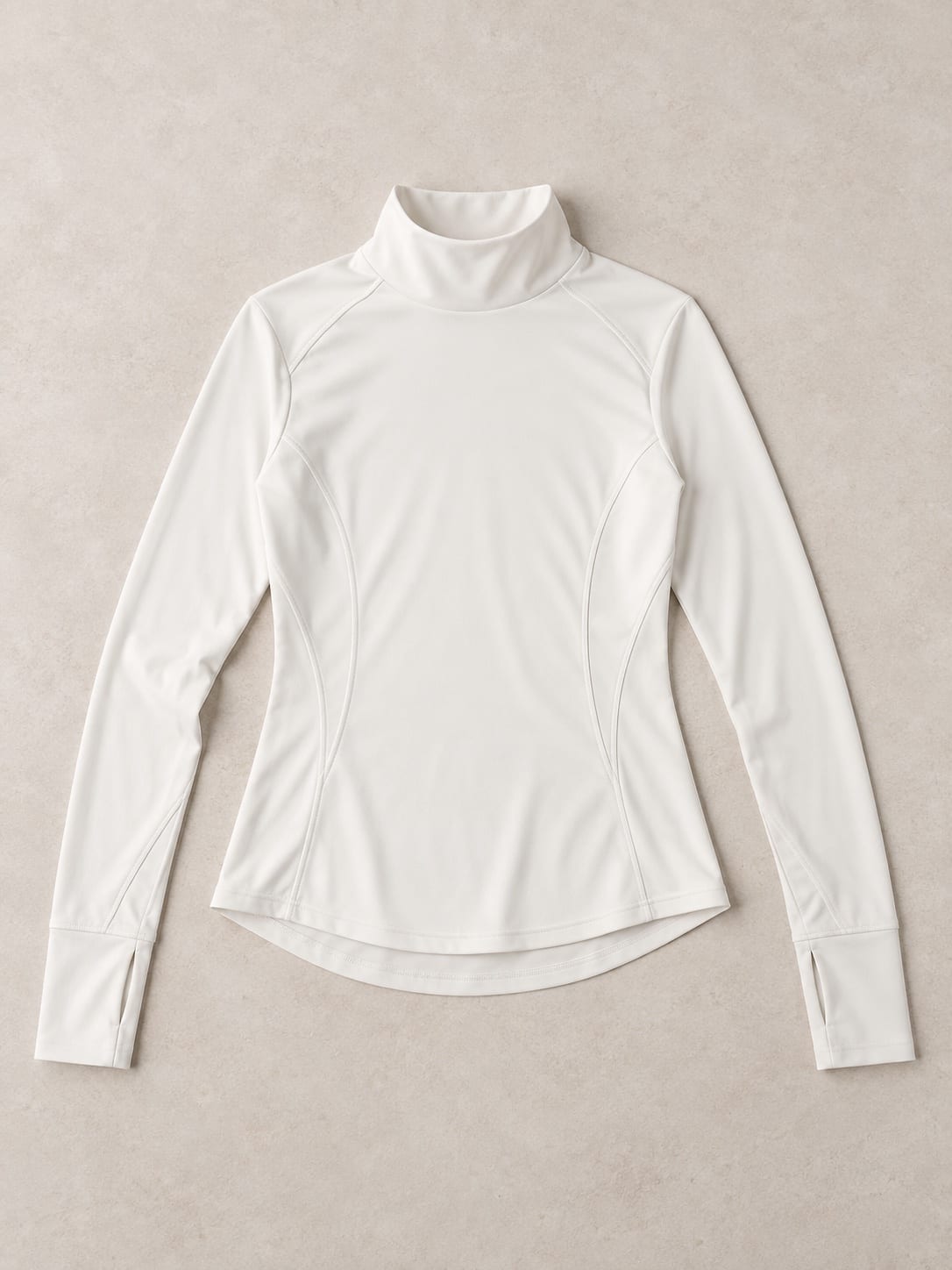
Mesh belongs where it can help airflow without creating transparency, snag risk or a friction line beneath the arm and jacket. A summer base-layer brief should map ventilation by body zone, then define the main fabric coverage, mesh openness, sleeve length, collar and fit. The sample must be reviewed dry, damp, stretched and layered because heat and sweat change cling and visibility. Cooling, quick-dry, UV and odour language should remain targets until the selected production material and finished construction provide suitable evidence.
Functional panel map
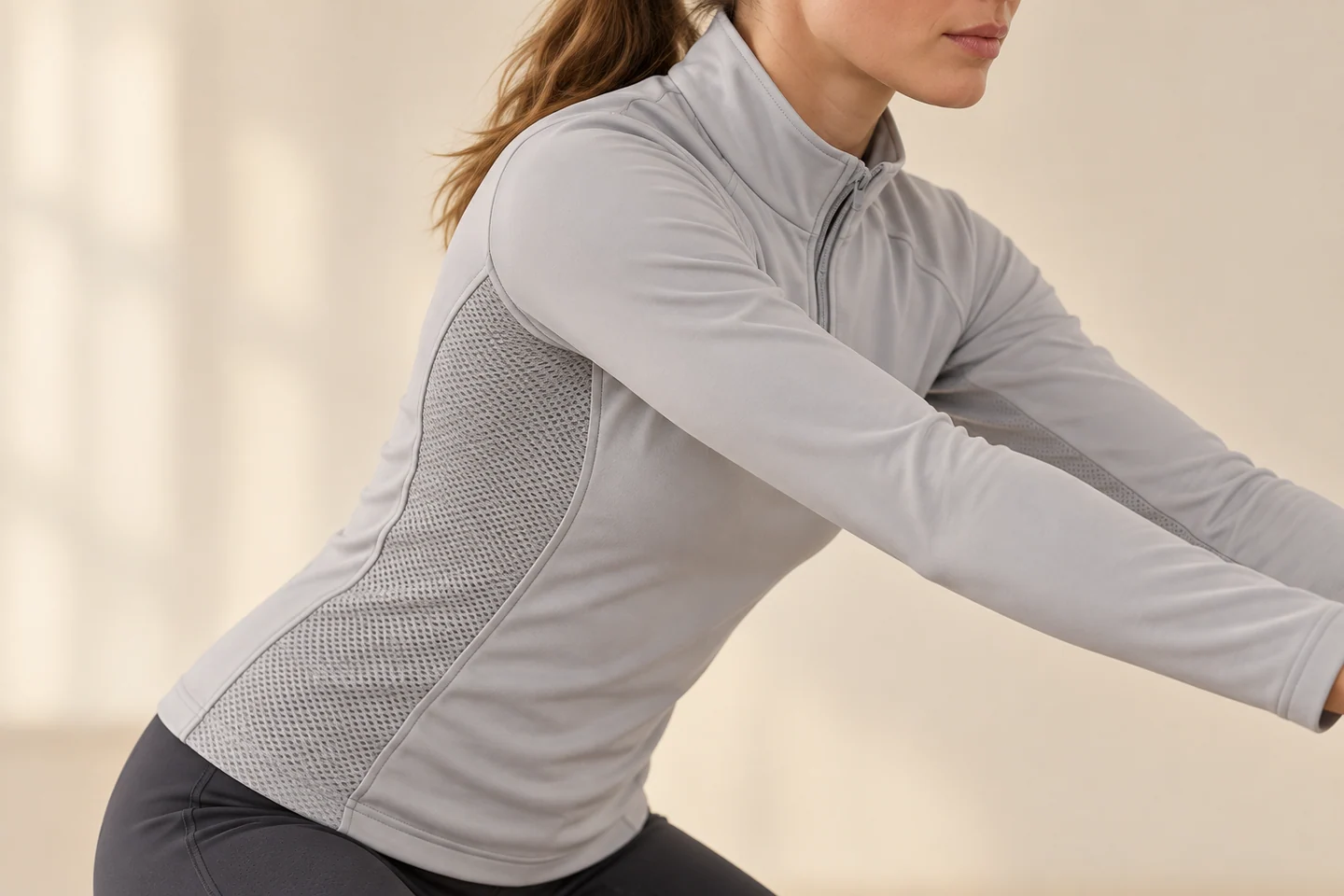
Prioritize upper back, underarm or other high-heat areas after considering sports-bra coverage, saddle posture and outer layers. Avoid placing rough mesh edges at the armpit crease or where a vest opening repeatedly rubs.
Coverage in motion
Stretch and moisture can make panels more revealing. Evaluate bra lines, torso opacity and mesh openings with arms raised and reaching forward, and define which zones may be sheer versus those that must stay covered.
Compatible stretch
The mesh and main jersey must extend and recover together. A weaker panel can bag, while a firmer panel can pull the garment off grain. Inspect seam waviness and body balance after wear and laundering.
THE FABRIC
SETS THE FEEL.
Compare material directions against your rider, climate and care expectations. Request the actual fabric specification and evidence for any performance claim.
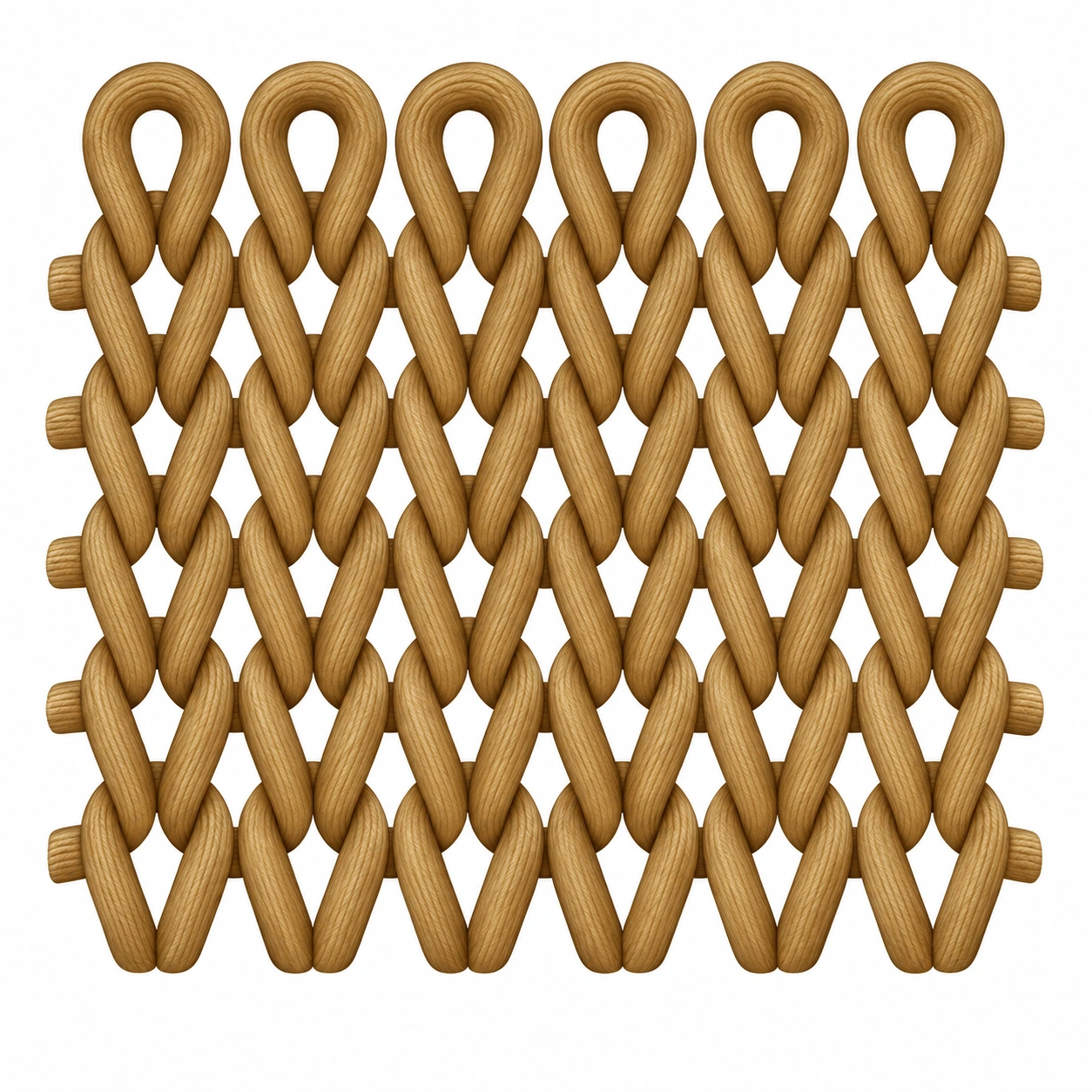
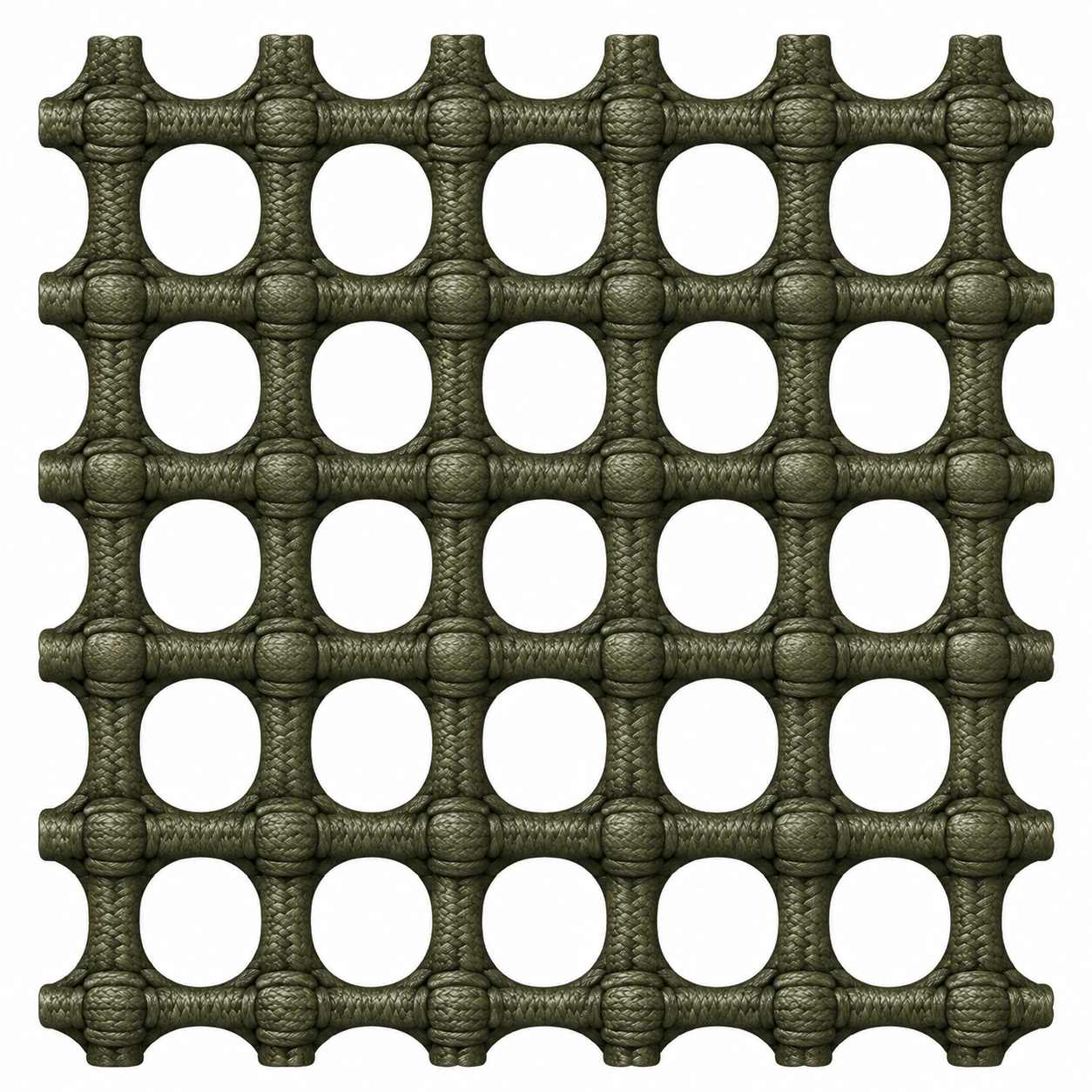
| Material direction | Why consider it | What to verify |
|---|---|---|
| Lightweight main jersey | A smooth stretch jersey can maintain torso coverage while allowing a close athletic fit and low bulk under protective or riding layers. | Test production colours for stretch, recovery, pilling, snagging, dimensional change, dry and wet opacity, colourfastness and requested moisture properties. |
| Engineered micro-mesh | A fine mesh can add airflow and visual texture with less overt transparency than larger holes, depending on colour and strain. | Measure extension and return, inspect wet transparency, seam slippage, snagging, colour match and skin comfort during a full wear test. |
| Open mesh accent | A more open structure provides a stronger seasonal design signal but requires deliberate coverage and edge treatment. | Approve worn placement over the buyer’s intended underlayers and test edge seams, snag exposure and recovery after the proposed care sequence. |
These are sourcing comparisons, not a list of stocked or certified fabrics. Confirm composition, weight, finish, availability and testing with the material selected for your project.
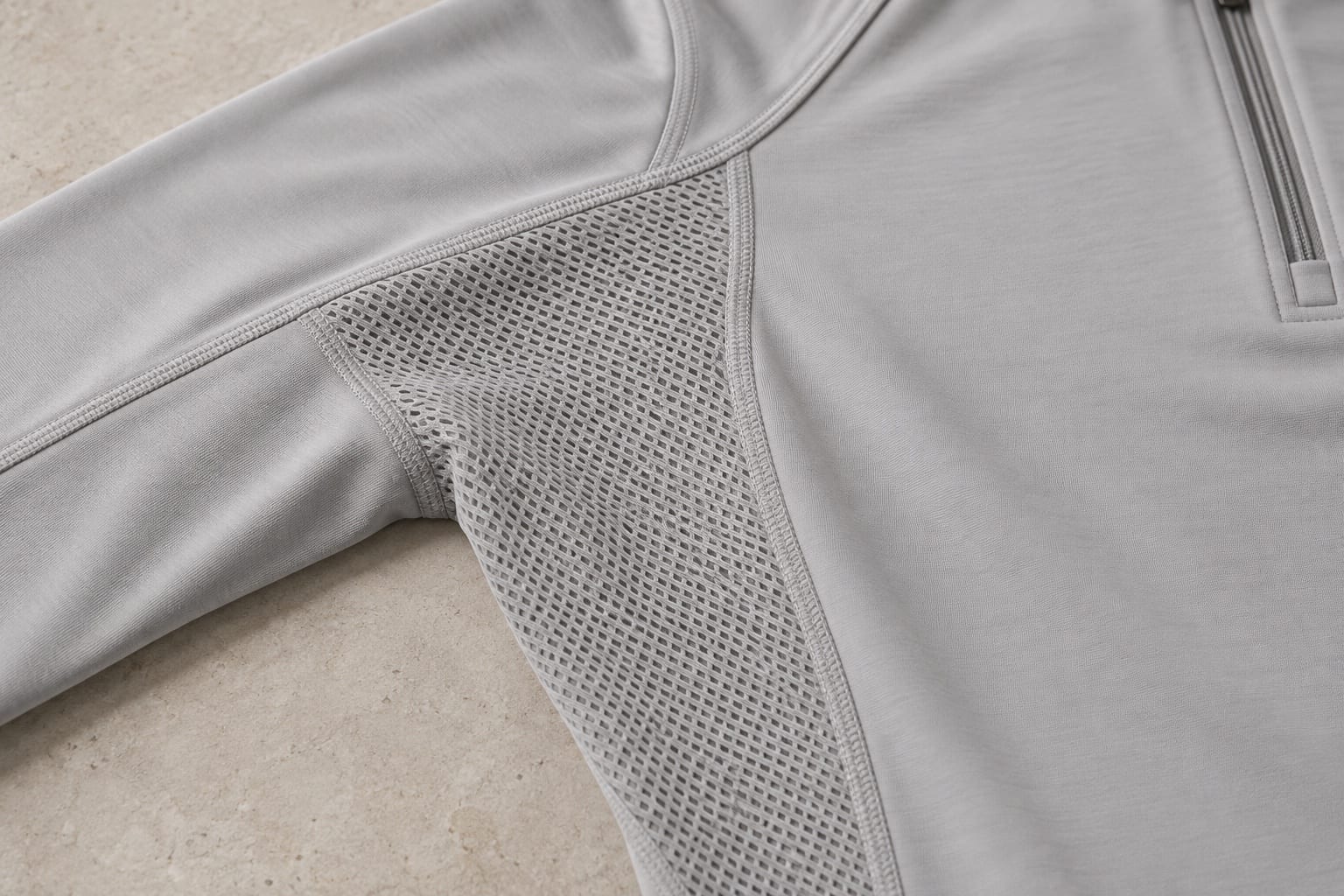 A CLOSER LOOK / DEVELOPMENT CONCEPT
IT’S IN
THE DETAILS.
Curved ventilation panels
Follow body heat zones while keeping seam junctions away from the deepest underarm crease and high-friction layer edges.
Soft seam finish
Select a low-profile construction compatible with both fabrics and control differential feed to prevent rippled mesh joins.
Coverage-led torso
Maintain opaque jersey across bust and lower torso unless the buyer deliberately approves another effect on the worn sample.
Stable collar and cuffs
Use edges that recover after stretching and sweating without thick bands that undermine the light summer hand.
FROM THE BRIEF.
INTO THE WORKROOM.
Develop the layer around movement and layering. Keep sleeve reach, zip length and inner comfort in the same brief.
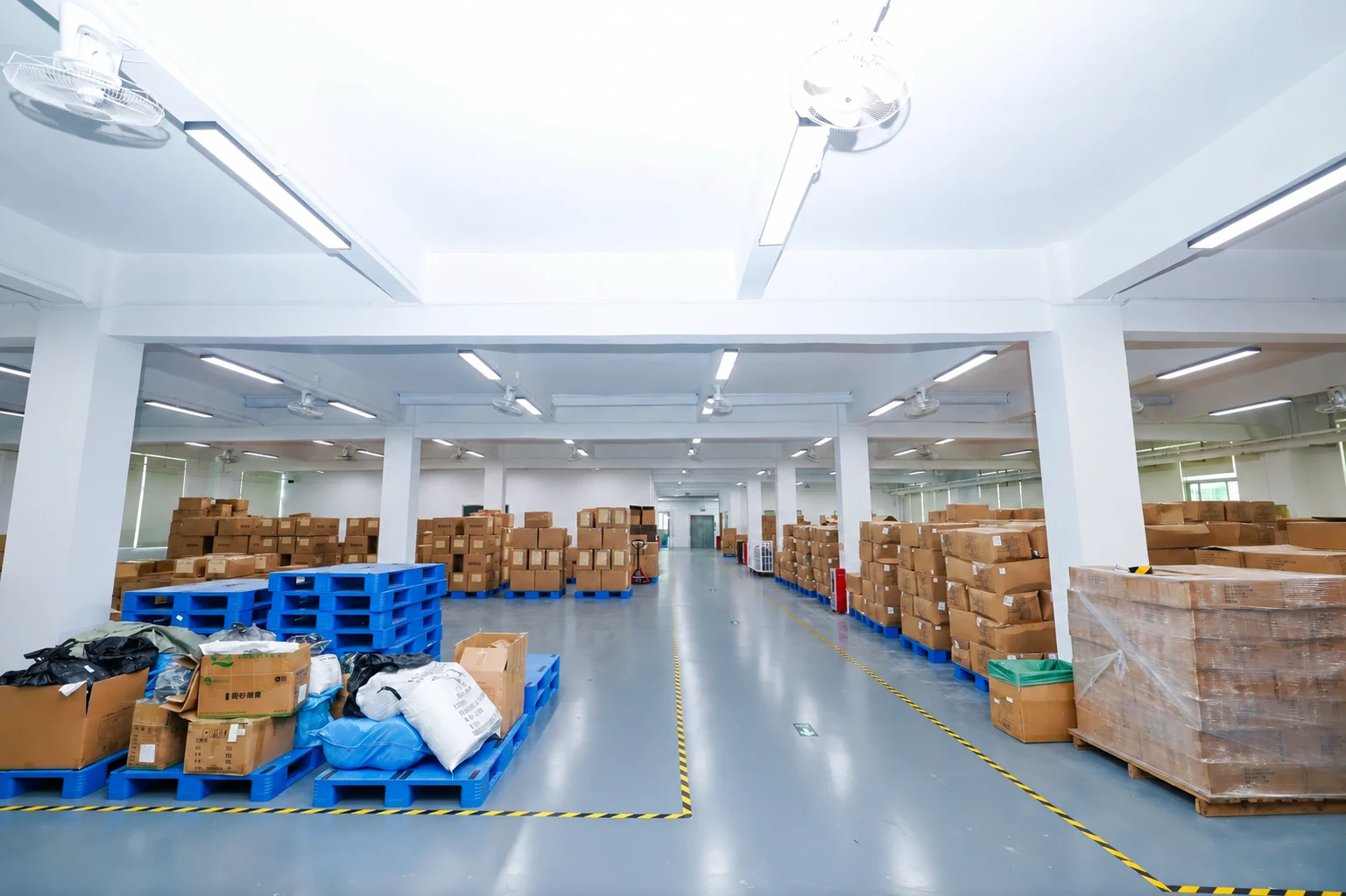
Explore our factory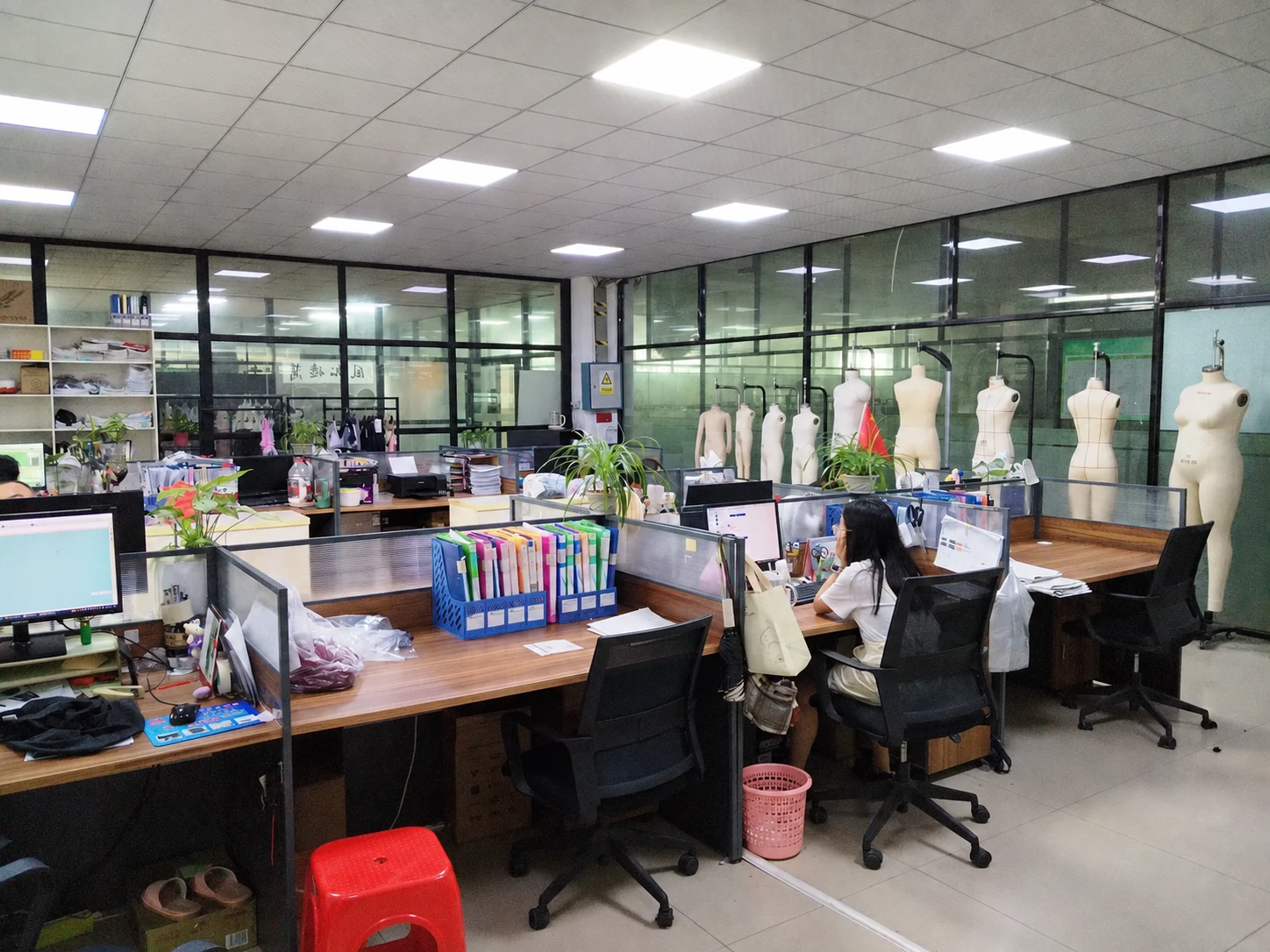
Curved ventilation panels
Follow body heat zones while keeping seam junctions away from the deepest underarm crease and high-friction layer edges.
Carry this into approval Factory views show our working environment. Your garment follows its agreed specification and sample.GET THE
RIGHT FIT.
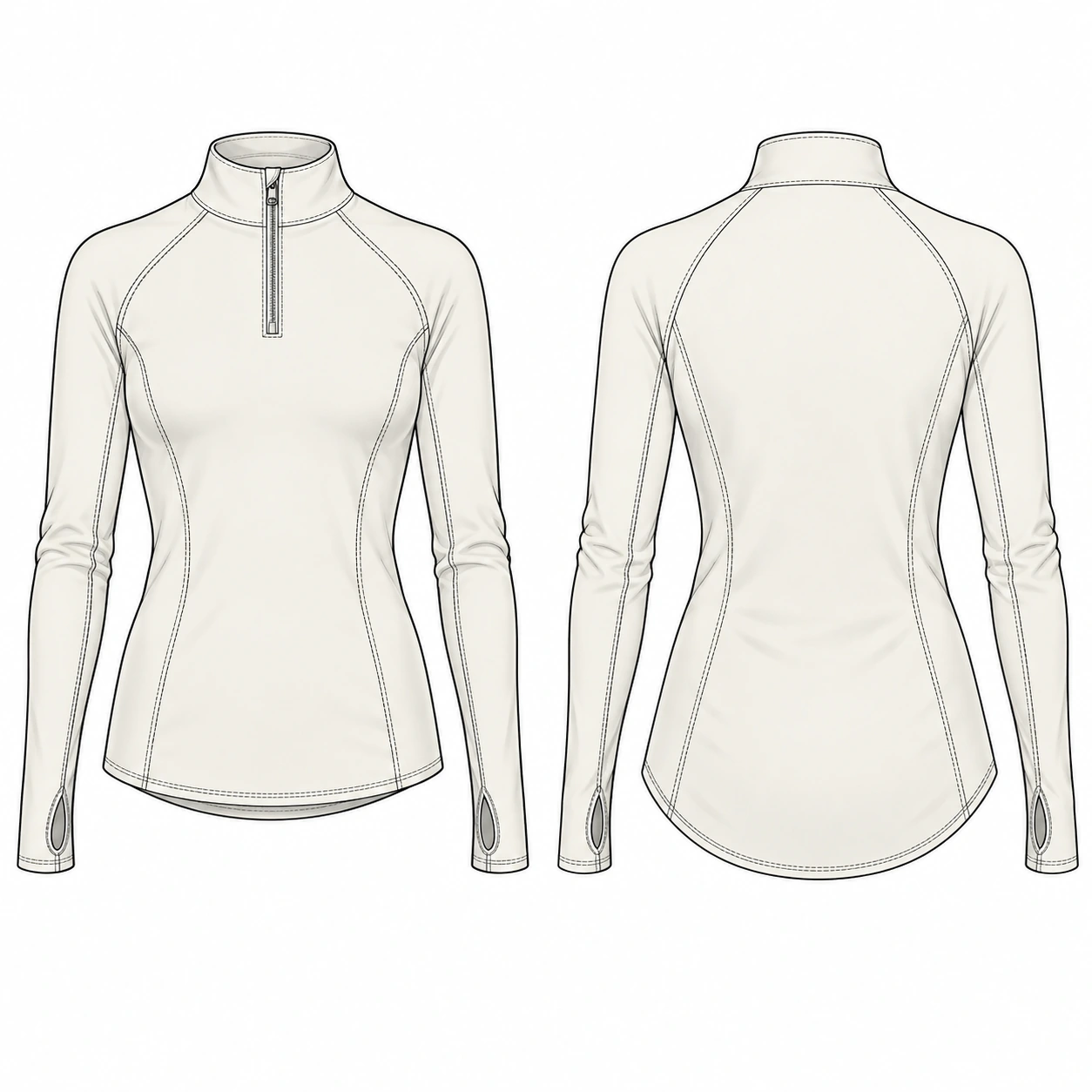
- AChest
- BShoulder span
- CSleeve length
- DBody length
A size label is only the beginning. Agree the measurement method, review the garment in use and keep the approved fit record with your specification.
Your fit-session checklist
Record the size worn, body measurements, intended underlayers and every proposed correction with the dated sample.
Note the size worn, body measurements, intended underlayers and each proposed correction. Recheck the affected measurement after a revision; confirm the size breakdown for each style and colour before bulk.
MAKE IT
RECOGNISABLY YOURS.
Use the product’s construction to guide decoration and finishing. Ask for placement, colour and material approval on the relevant sample.
Small details.
One identity.
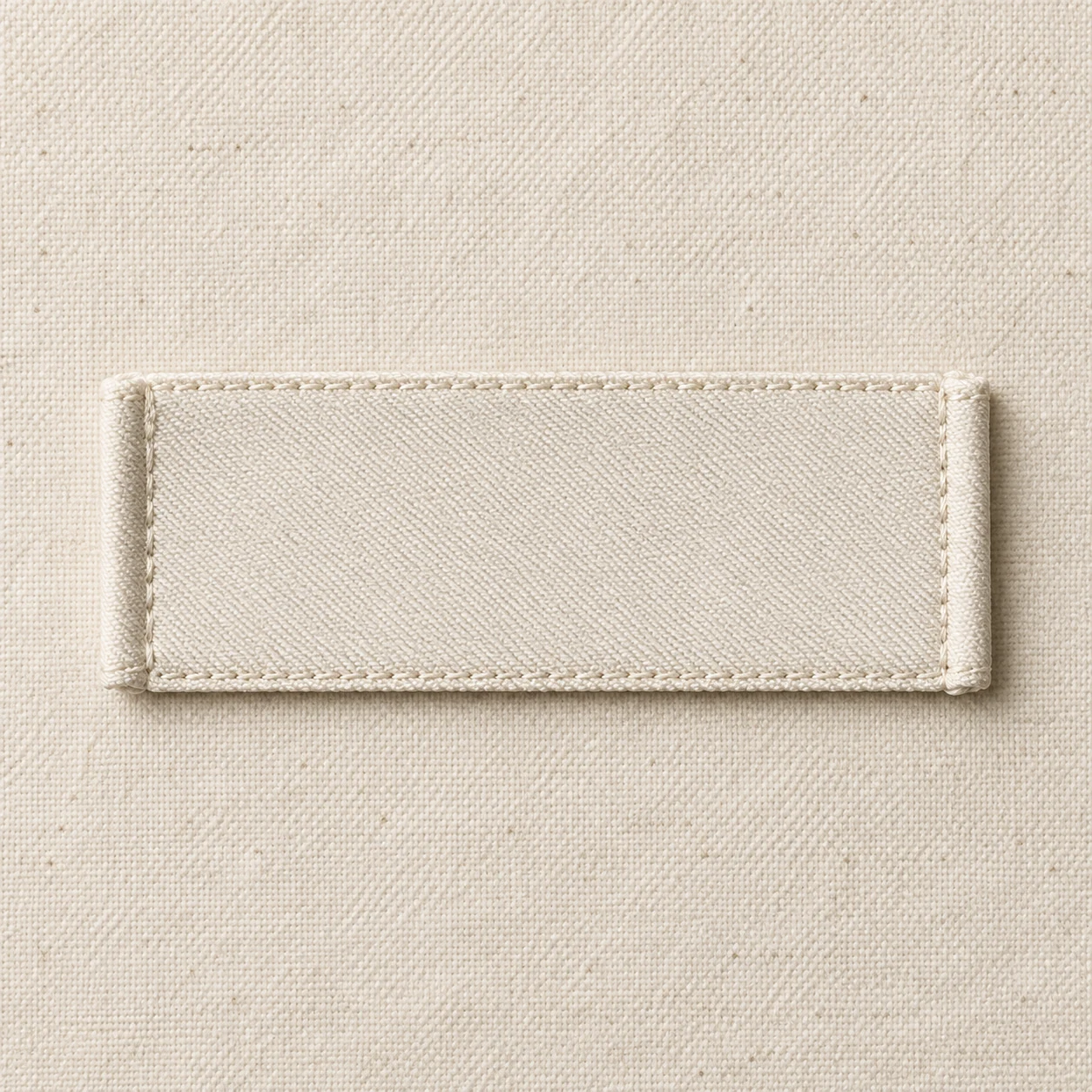
Folded edges · fine weave
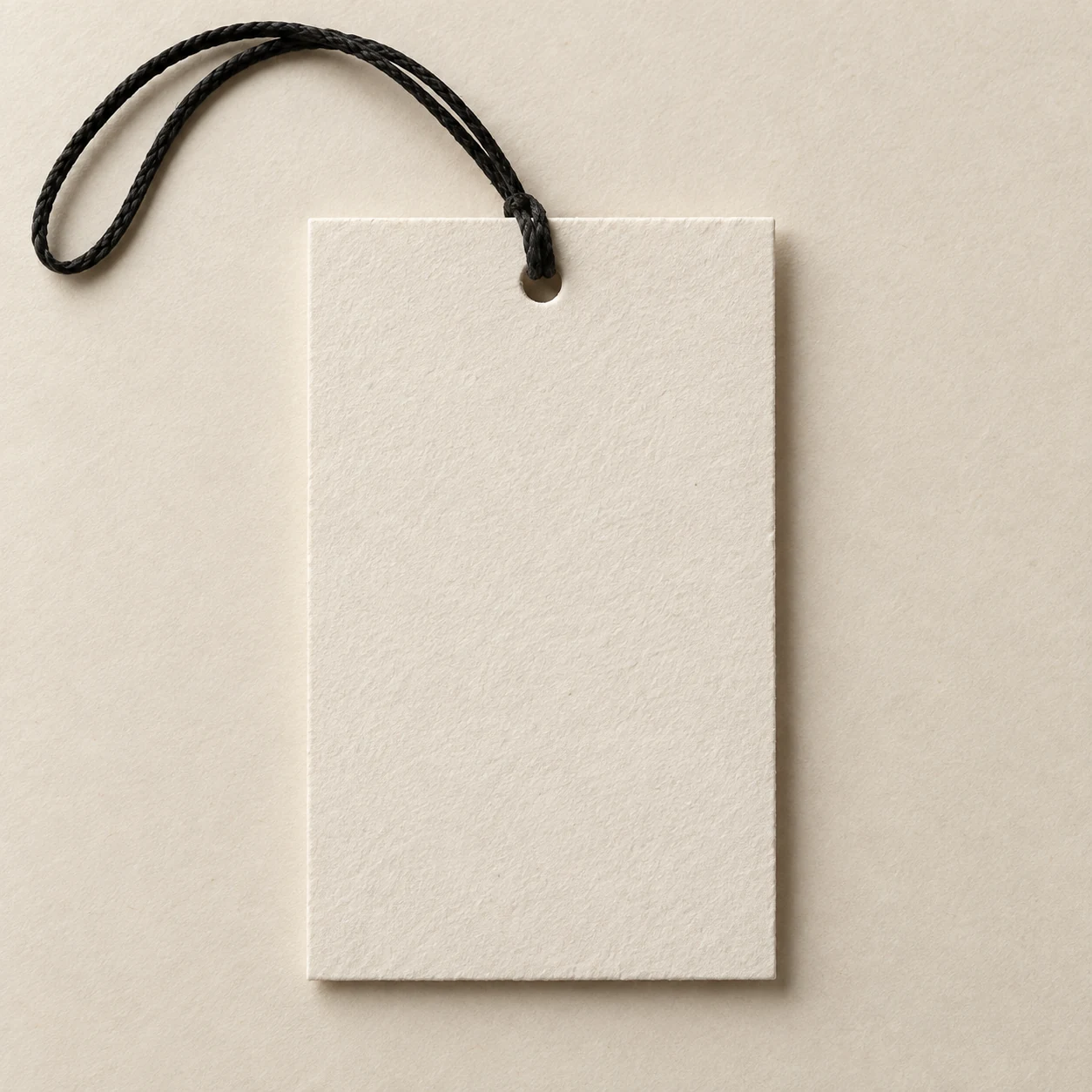
Textured stock · cord attachment
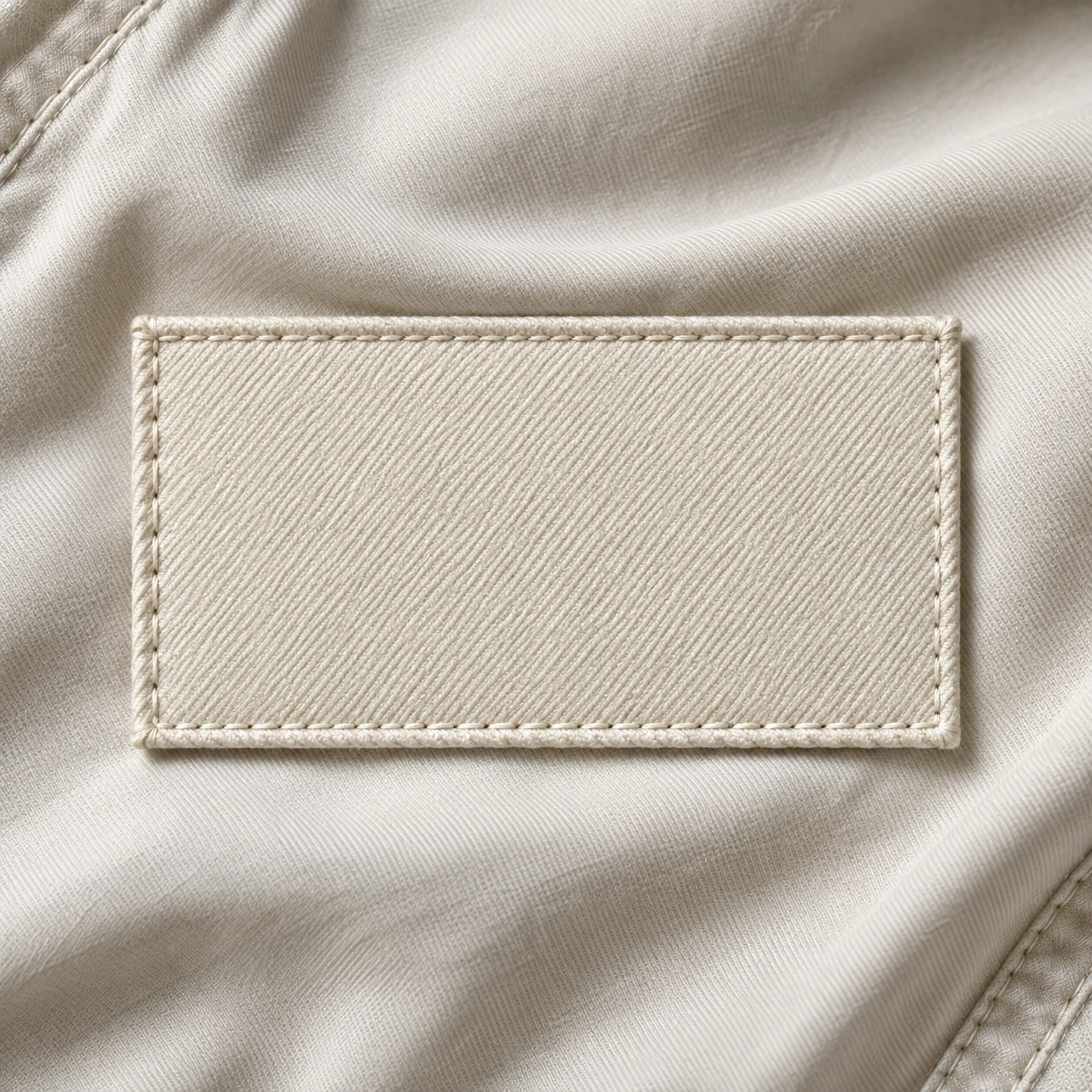
Raised edge · stitched placement
Material mockups with a live wordmark study. Print, weave, colour matching and placement are confirmed on your physical sample.
Ventilation artwork
Treat panel shapes as graded pattern pieces with clear coverage boundaries, seam allowances and direction, not decorative lines added only to a sketch.
Sleeve format
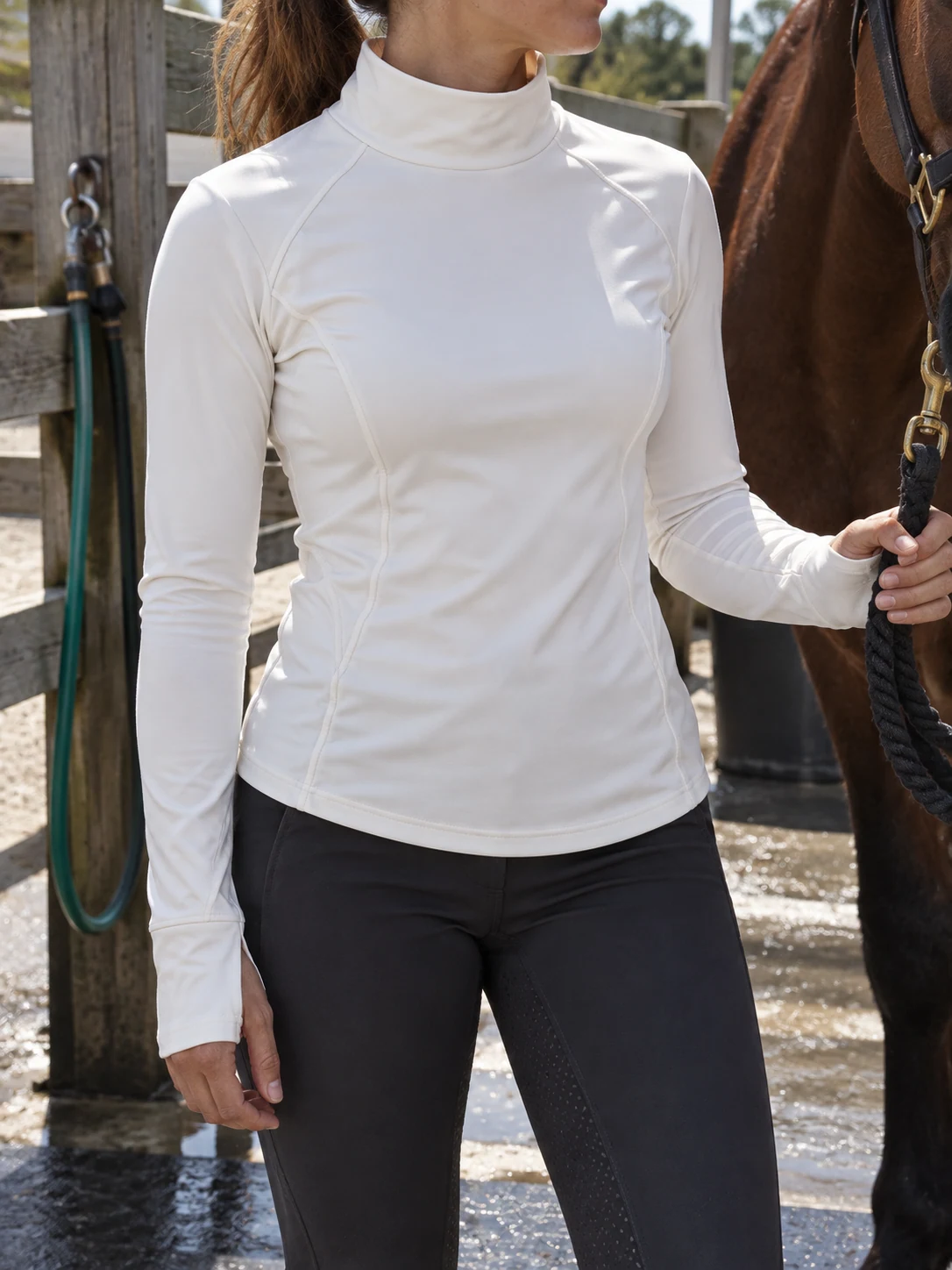
Choose short or long sleeves from sun exposure, layering and retail need; recheck cuff, bicep and mesh balance for each version.
Colour relationships
Approve shell and mesh together in every colour because dye depth and openness alter perceived matching, contrast and transparency.
Protected branding
Place logos on stable jersey zones where artwork can stretch predictably, avoiding highly open mesh unless the method is specifically sampled.
APPROVE THE DETAIL.
THEN THE ORDER.
The first sample helps you make decisions. Define review conditions and acceptance criteria before you compare the result.
Review the mesh-panel summer base layer sample
Sampling takes 7–10 working days from the agreed start. Record each decision against the dated sample before bulk approval.
Rider, material direction, measurements and artwork.
DEFINE THE STARTTurn the agreed direction into a garment to review.
7–10 WORKING DAYSReview fit, finish and changes. Confirm the final specification.
REVISE IF NEEDEDProceed with agreed quantities, colours, labels and packing.
30–45 WORKING DAYSA shared development direction
Bring reference garments, your rider profile, target colours and any artwork. We turn these into the measurements, materials and construction questions that the sample needs to resolve.
Sample feedback can return to development. Revisions and transit are planned separately; timing begins from the agreed specification and start date.
KEEP THE APPROVAL.
WITH THE ORDER.
One agreed reference for the workroom: the dated sample, its specification and your confirmed order breakdown.
Sample decisions
- Damp coverage
Dampen mapped zones uniformly, then view under direct and diffuse light with intended underlayers while reaching, bending and mounted.
- Underarm comfort
Ride through a normal warm session and inspect panel edges and seam intersections for rubbing, impressions, thread irritation or restriction.
- Mesh recovery
Measure panels before wear, after sustained extension and after laundering, noting bagging, seam wave or mismatch with the jersey.
Style, colour & size allocation
Confirm each style and colour separately, with the size allocation attached. The minimum is 100 pieces per style, per colour.
Labels, packing & timing
Agree label artwork, packing instructions and the production start. Bulk production takes 30–45 working days from the confirmed start; revisions and transit are planned separately.
A CLEARER BRIEF.
A MORE USEFUL QUOTE.
Price follows an agreed product, quantity and delivery scope. Use these inputs to compare proposals on the same basis.
Panel count
More inserts increase pattern pieces, cutting, differential-feed sewing, matching and seam inspection.
Mesh development
Custom colour, engineered openness or minimum material orders can affect cost and schedule.
Performance evidence
Cooling, drying, moisture or UV claims require agreed test methods and relevant samples.
Colour variants
Each shell-and-mesh pairing needs transparency, shade and care approval rather than one generic sign-off.
Bring these six things
Planning baseline: 100 pieces minimum per style, per colour. Sampling takes 7–10 working days; bulk production takes 30–45 working days from the agreed start.
100 pieces minimum per style, per colour. State each colour quantity separately; confirm your proposed size allocation.
GOOD QUESTIONS.
BETTER DECISIONS.
Product-specific sourcing questions to resolve before sampling.
No. Mesh area must be balanced with coverage, recovery, snag risk, seam comfort and the outer layers a rider actually wears. A smaller well-placed panel may perform and merchandise better than broad transparent areas.
Only after the buyer defines the claim and secures appropriate evidence for the exact material, colour and relevant garment coverage. Open structure and stretch can affect protection, so a generic fibre statement is not enough.
Assess it beside the production main fabric on a worn garment, both dry and damp. Approve whether the relationship should match or contrast, and document tolerance because different constructions absorb dye and reflect light differently.