 REINFORM
Give the factory one usable starting point
A production-ready tech pack normally identifies the style, front and back views, construction details, bill of materials, colourways, base-size measurements, grading direction, artwork placement, labels and packaging. If a complete pack is not available, send a reference garment, clear images or sketches with the intended changes. Mark which elements are essential and which are open to factory recommendation.
Add the commercial context: quantity per style per colour, target size range, destination market, target goods-ready date and intended use. A white competition breech and a dark daily training tight may share a silhouette, but opacity, pocket treatment, presentation and label requirements can be different.
Close open decisions before sampling
Before the 7–10-working-day sample window starts, confirm what has to be fixed for the sample: selected fabric direction, colour reference, key trims, grip or patch construction, base sample size, logo artwork and measurement chart. Shipping time is separate from sample-making time.
Record substitutions and assumptions in writing. If the exact bulk fabric or branded hardware is not used in a development sample, the sample tag or comment sheet should say so. Mature private-label workflows distinguish development, fit and photo samples and document changes between them; SmartPak’s supplier guidance is a useful example of that discipline.
Review fit, construction and brand details systematically
Evaluate the sample on a suitable rider and record the result by point, not with a single “approved” message.
- Fit and measurements: rise, waist, hip, thigh, knee, inseam, leg opening and movement in the riding position.
- Construction: seam placement, waistband stability, closure operation, lower-leg bulk, pocket access and security.
- Grip or patch: coverage, alignment, edge finish, stretch interaction and visual scale when worn.
- Materials and appearance: colour, hand feel, coverage, recovery observations and any visible difference from the agreed reference.
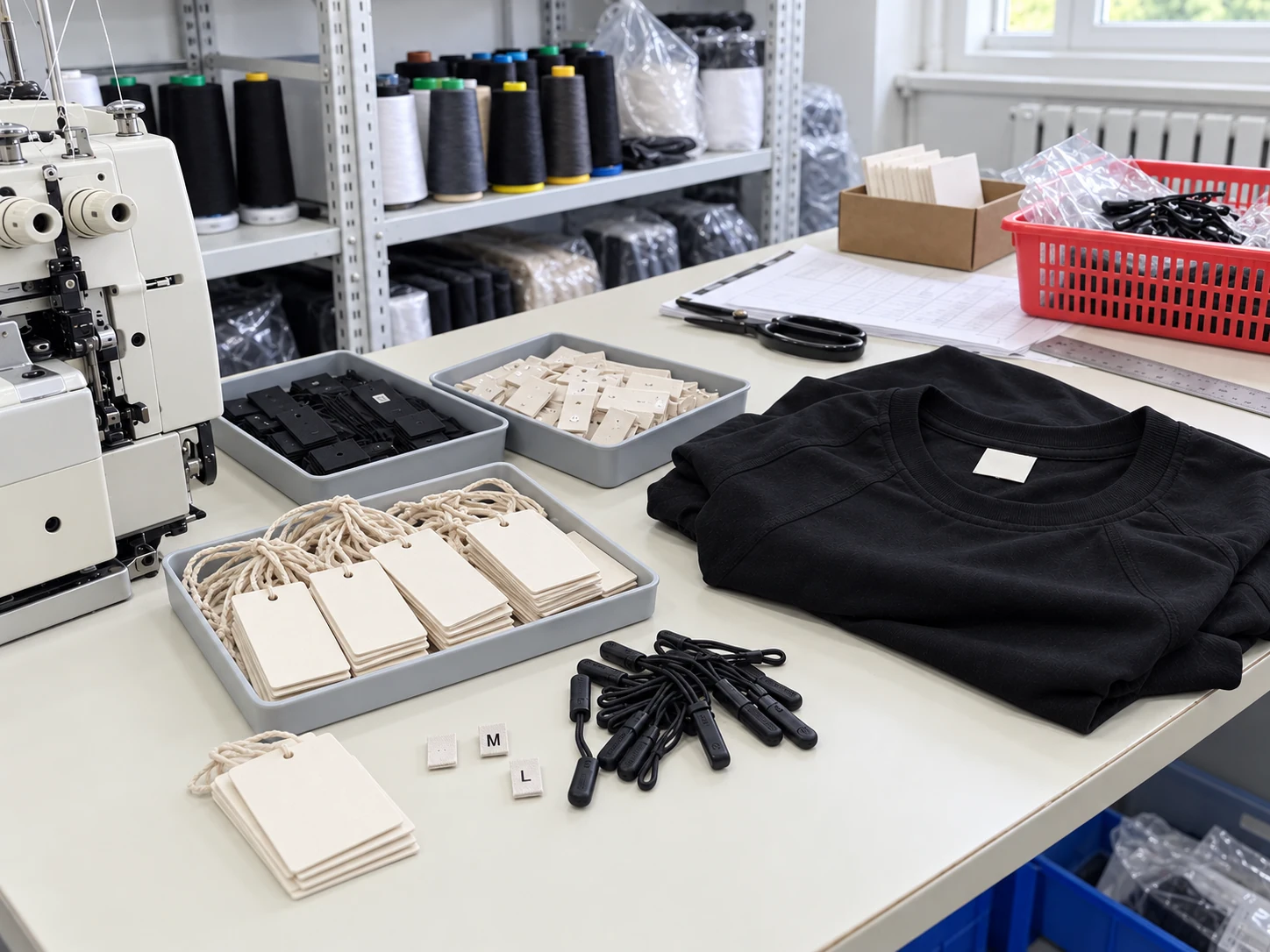
- Branding and finishing: logo size and position, labels, care/content copy, hangtag, folding and packaging.
Use annotated photos and a numbered comment sheet. Separate required corrections from optional preferences. Where a measurement changes, update the measurement table; do not leave the change only in an email thread.
Freeze the approved reference
Final approval should identify the sample version and date, approved measurement/specification file, colour reference, material and trim list, grip artwork, logo files, label copy and packaging instructions. Both parties should retain the same record. Bulk production is then planned for 30–45 working days after sample and order approval, subject to the confirmed order and material readiness.
For destination-market labels, confirm the responsible brand or importer and required fibre, origin, care and language information. US rules, for example, cover fibre content, country of origin, responsible business identity and care instructions for most apparel; these details should be resolved before bulk labels are ordered.
Action: Submit the latest files as one revision-controlled package. Ask REINFORM to identify missing decisions before sampling, then approve the sample with a signed checklist rather than a message based on appearance alone.
These references cover supplier processes, textile testing and market-specific labelling. They do not certify REINFORM or set the terms of your order. Confirm the product specification, destination requirements and quotation with your team.
Put the thinking into your next collection.
Bring your product direction, quantity and questions. We’ll start with a useful project review.
Start your project